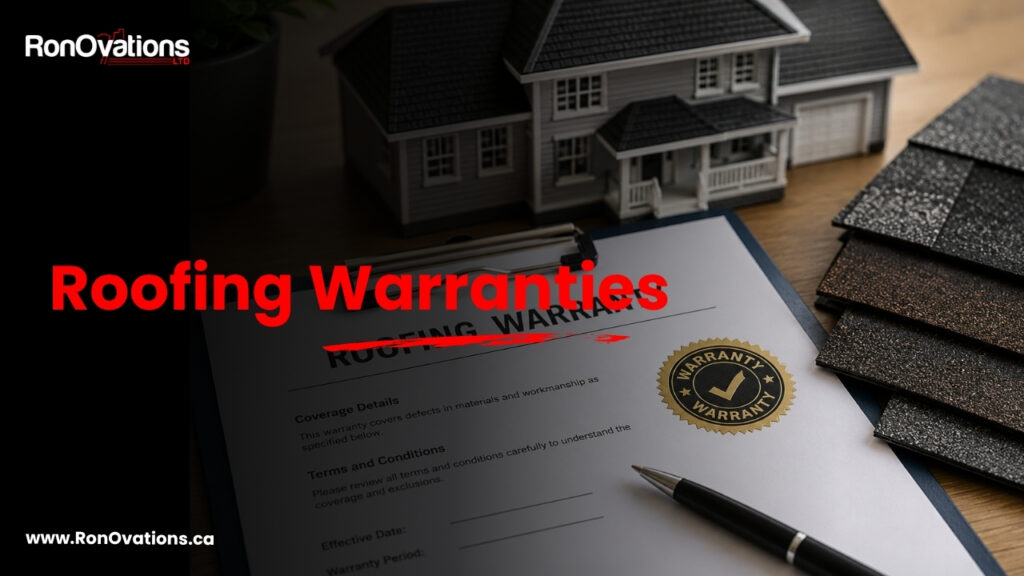
Quick answer: Roofing warranties cover material defects and installation errors, with terms ranging from 5 to 50 years depending on the product and contractor certification level. Manufacturer warranties protect against defective shingles or membranes, while workmanship warranties cover installer mistakes. Choosing a certified contractor can unlock non-prorated coverage worth thousands in potential savings.
Why Roofing Warranties Matter for Canadian Homeowners
Most roofing warranties explained in simple terms come down to two layers of protection: one from the manufacturer and one from the installer. Together, they can shield you from repair bills that commonly run $2,000 to $15,000 or more in Ontario. Canadian freeze-thaw cycles, ice damming, and heavy snow loads put extraordinary stress on roofing materials, making solid warranty coverage essential rather than optional.
Since founding RonOvations in 2012, we have seen homeowners lose coverage over preventable misunderstandings, from skipped attic ventilation upgrades to unauthorized pressure washing. After inspecting and replacing over 1,500 roofs across the GTA, we have learned exactly where warranty claims succeed and where they fall apart. This guide breaks down roof warranty types, what each covers, what voids them, and how to file a claim so your investment stays protected.
Manufacturer Warranty vs. Workmanship Warranty
What is the difference between a manufacturer warranty and a workmanship warranty?
A manufacturer warranty covers defects in the roofing material itself. If your GAF Timberline HDZ shingles crack prematurely or lose granules well before their rated lifespan, the manufacturer bears the replacement cost. This warranty is issued by the brand and typically runs 25 years to a limited lifetime.
A workmanship warranty covers errors made during installation, such as improper flashing details, incorrect nailing patterns, or missed starter-strip adhesion. This warranty is issued by the installing contractor. If a leak traces back to a bad install rather than a bad shingle, the workmanship warranty is the one that applies.
Both warranties run concurrently but are filed with different parties. Having both is critical because a manufacturer will deny a claim caused by poor installation, and a contractor warranty will not cover a factory-defective shingle.
Can you have both warranties on the same roof?
Yes, and you should. As a GAF Certified, Owens Corning Preferred Contractor, and IKO ShieldPro Plus installer, RonOvations can offer enhanced manufacturer warranties that bundle material and workmanship coverage under one programme. Uncertified installers cannot access these tiers, which means homeowners who hire them are left with a basic material-only warranty and whatever independent workmanship guarantee the contractor provides.
What Roof Warranty Coverage Typically Includes
Does a roof warranty cover storm damage or ice dams?
Standard roof warranty coverage addresses manufacturing defects, premature material failure, algae-resistance performance, and wind ratings up to the stated limit (typically 130 mph for architectural shingles like Owens Corning Duration). It does not cover acts of nature such as hail, tornadoes, or falling trees. Storm damage is a homeowner insurance matter, not a warranty issue.
Ice damming and freeze-thaw damage are classified as environmental conditions under every major manufacturer’s terms. The exception is if the product fails below its rated performance threshold. For example, if shingles rated to -30 C crack at -15 C, that is a legitimate warranty claim.
Prorated vs. Non-Prorated Warranties: The Fine Print
What is the difference between a prorated and non-prorated roof warranty?
A prorated warranty reduces coverage over time. In year one you might receive 100% material replacement value, but by year 20 only 20% of the original value remains. A non-prorated warranty provides full replacement coverage for a defined period, then may convert to prorated terms for the remaining years.
The term “lifetime” in Canadian roofing warranties typically means the reasonable useful life of the product or the period the original owner occupies the home, not an unlimited timeframe. Always confirm the non-prorated period in writing before signing.
| Product | Warranty Structure | Non-Prorated Period | Total Coverage |
|---|---|---|---|
| GAF Timberline HDZ (with Golden Pledge) | Non-prorated, then prorated | 25 years (material + labour) | Lifetime limited |
| Owens Corning Duration (Preferred Protection) | Non-prorated, then prorated | 10 years | Lifetime limited |
| IKO Dynasty (ShieldPro Plus) | Non-prorated, then prorated | 15 years | Limited lifetime |
| Decra Stone-Coated Steel | Non-prorated | 50 years | 50 years |
| Mule-Hide TPO (flat roof) | Non-prorated | 15 to 25 years | 15 to 25 years |
| Carlisle EPDM (flat roof) | Non-prorated | 15 to 20 years | 15 to 20 years |
Roof Warranty Length by Material Type
How long is the warranty on asphalt shingles compared to metal or flat roofing?
Asphalt shingle warranties range from 25 years to limited lifetime. Premium architectural lines like GAF Timberline HDZ, Owens Corning Duration, IKO Cambridge, IKO Dynasty, BP Mystique, and CertainTeed Landmark all fall in this range, with the non-prorated window varying by certification tier. Understanding the roof warranty for asphalt shingles versus other materials is key to making an informed decision.
Metal roofing carries some of the longest roof warranty lengths available. Decra stone-coated steel panels and standing-seam systems include a 50-year non-prorated material warranty plus a separate paint and finish warranty. The roof warranty for metal roofs is a major reason homeowners choose this material despite the higher upfront cost.
Flat roof systems sit in the middle. Mule-Hide TPO and Carlisle EPDM membranes typically carry 15 to 25-year warranties depending on membrane thickness and whether the system is mechanically attached or fully adhered. Modified bitumen flat roofs usually offer 10 to 20 years. When evaluating a roof warranty for flat roofs, membrane thickness and attachment method are the two biggest factors influencing coverage length.
Workmanship warranties from qualified contractors generally range from 5 to 10 years. Certified contractors can extend that to 25 years through enhanced manufacturer programmes, a significant difference that directly affects long-term roof warranty benefits.
Ontario-Specific Coverage: Tarion and the Building Code
Does Tarion cover the roof on a new home in Ontario?
Yes. The Tarion Warranty Corporation administers the Ontario New Home Warranties Plan Act, which requires builders to enrol new homes in the programme. Tarion provides one-year coverage for defects in workmanship and materials, two-year coverage for water penetration through the building envelope (including the roof), and seven-year coverage for major structural defects. This is the primary roof warranty for new homes in Ontario and applies automatically to enrolled properties.
This statutory coverage applies to new-build homes only, not re-roofing projects on existing properties. For re-roofs, your protection comes from the manufacturer warranty and the contractor’s workmanship warranty. All roofing work in Ontario must comply with the Ontario Building Code (OBC), and non-compliance can void both warranty types.
Common Mistakes That Void a Roofing Warranty
Can pressure washing my roof void the warranty?
Yes. Pressure washing strips protective granules from asphalt shingles, and every major manufacturer we install, including GAF, Owens Corning, and IKO, explicitly excludes damage from pressure washing. In our experience, this is one of the most common and most avoidable warranty-voiding mistakes homeowners make. Knowing how to avoid voiding a roof warranty starts with reading the maintenance requirements in your warranty document.
Other actions that void coverage include hiring an uncertified contractor for the original install or subsequent repairs, performing unauthorized modifications or penetrations, failing to maintain adequate attic ventilation (a minimum 1:300 net free ventilation area ratio per OBC), and neglecting basic maintenance like clearing debris from valleys and keeping eavestroughs functional.
On older Ontario homes built before 1990, inadequate soffit ventilation is a recurring issue. We have personally re-roofed dozens of 1970s-era bungalows in Mississauga and Oakville where the original soffit had zero ventilation openings. If not corrected during re-roofing, it can void a new shingle warranty from day one. We flag this during every pre-installation inspection and address it before the first shingle goes down.
Understanding Roof Warranty Limitations and Exclusions
Even the best warranties have boundaries. Key roof warranty limitations to watch for include:
- Transferability restrictions: Many warranties are transferable to a subsequent homeowner only within the first 60 days of sale, and the non-prorated period often shortens upon transfer.
- Single-layer requirement: Warranties on asphalt shingles typically require a full tear-off. Layering new shingles over old ones can void coverage entirely.
- Ventilation compliance: Manufacturers require documented proof that attic ventilation meets their specifications, which often exceed minimum OBC requirements.
- Accessory matching: Using a different brand’s underlayment, starter strip, or ridge cap than the shingle manufacturer specifies can downgrade or void the warranty.
Reading the warranty document before signing the contract, not after a problem arises, is the single most effective way to avoid surprises.
How to File a Roofing Warranty Claim in Canada
What documents do I need to file a roof warranty claim?
Start by identifying whether the issue is a material defect or an installation error. This determines whether you contact the manufacturer or the contractor. Understanding how to claim a roof warranty correctly from the outset saves weeks of back-and-forth. Gather the following documentation before reaching out:
- Original roofing contract and invoice
- Warranty certificate or registration confirmation
- Dated photographs of the issue (close-up and wide-angle)
- Maintenance records, including gutter cleaning and ventilation inspections
- Any correspondence with the contractor or manufacturer
Do not attempt repairs before an inspection. Unauthorized repairs are one of the fastest ways to complicate or void a claim. From our experience handling warranty issues since 2012, claims with thorough documentation are resolved significantly faster than those without.
How Certified Contractors Unlock Better Warranty Tiers
Why does it matter if my roofer is certified by the shingle manufacturer?
Manufacturer certification programmes exist specifically to give homeowners access to higher warranty tiers. For example, the GAF Golden Pledge warranty, available only through GAF Master Elite or Certified contractors, includes 25 years of non-prorated workmanship coverage plus a lifetime limited material warranty. A non-certified installer using the same GAF Timberline HDZ shingles can only offer the base material warranty with zero manufacturer-backed workmanship protection.
RonOvations holds GAF Certified, Owens Corning Preferred Contractor, and IKO ShieldPro Plus designations. These certifications require ongoing training, adherence to manufacturer installation standards, and maintaining good standing with the BBB. The practical result for homeowners is access to the strongest warranty programmes each brand offers, at no additional roof warranty cost beyond the project itself.
What to Compare Before Signing a Roofing Warranty
When evaluating warranties from competing quotes, this roof warranty comparison guide covers the factors that matter most:
- Non-prorated period length: This is the window of full-value coverage and matters more than the total stated term.
- Labour inclusion: Does the warranty cover labour for repairs, or only replacement materials?
- Transferability: A transferable warranty adds measurable resale value to your home.
- Contractor certification level: Higher tiers unlock better terms at no extra cost.
- Ventilation and accessory requirements: Confirm these are included in the project scope, not left as your responsibility.
In Ontario, all warranty coverage is contingent on OBC-compliant installation. A warranty issued on code-violating work is effectively unenforceable.
Frequently Asked Questions
Do roofs come with warranties in Canada?
Yes. Nearly all roofing products sold in Canada include a manufacturer warranty covering material defects. The length and terms vary by brand and product line. Reputable contractors provide a separate workmanship warranty covering installation errors. For new-build homes in Ontario, the Tarion Warranty Corporation provides additional statutory coverage under the Ontario New Home Warranties Plan Act.
How long should a roofer warranty their work?
A workmanship warranty from a qualified contractor typically ranges from 5 to 10 years. Certified contractors holding designations like GAF Certified, Owens Corning Preferred, or IKO ShieldPro Plus can offer extended workmanship coverage of up to 25 years through enhanced manufacturer programmes. Always confirm the workmanship warranty length in writing before signing a contract.
Are extended roof warranties worth the cost?
Enhanced warranties from manufacturers like GAF and Owens Corning are generally worthwhile because they add workmanship coverage and extend the non-prorated material protection period. When installed by a certified contractor, the enhanced warranty is typically included in the project cost rather than sold as a separate add-on, making it strong value for homeowners concerned about long-term roof warranty benefits.
What voids a roofing warranty?
Common warranty-voiding actions include installation by an uncertified contractor, unauthorized repairs or modifications, inadequate attic ventilation, pressure washing the shingles, layering new shingles over old ones, and failure to perform basic maintenance such as clearing debris and keeping eavestroughs functional. Review the manufacturer’s specific maintenance requirements to keep your coverage intact.
Is a roofing warranty transferable when I sell my home?
Many manufacturer warranties are transferable to a new owner, but the process usually requires notification within 60 days of the property sale. Upon transfer, the non-prorated period often shortens. Workmanship warranties from the contractor may or may not transfer depending on the contract terms. A transferable warranty is a genuine selling point that can increase buyer confidence and home value.
What is the difference between a limited lifetime warranty and a 50-year warranty?
A limited lifetime warranty covers the product for the reasonable useful life of the material or for as long as the original owner occupies the home, whichever comes first. A 50-year warranty sets a fixed endpoint. In practice, the non-prorated period within each warranty matters more than the headline number. A 50-year warranty with a 10-year non-prorated window may offer less real-world value than a limited lifetime warranty with a 25-year non-prorated period.
Understanding roofing warranties before you sign a contract is the most reliable way to protect your investment and avoid unexpected repair costs. Focus on the non-prorated coverage window, confirm your contractor’s certification level, and keep your documentation organized from day one. For professional roofing services across Ontario, visit our Ontario roofing services page.