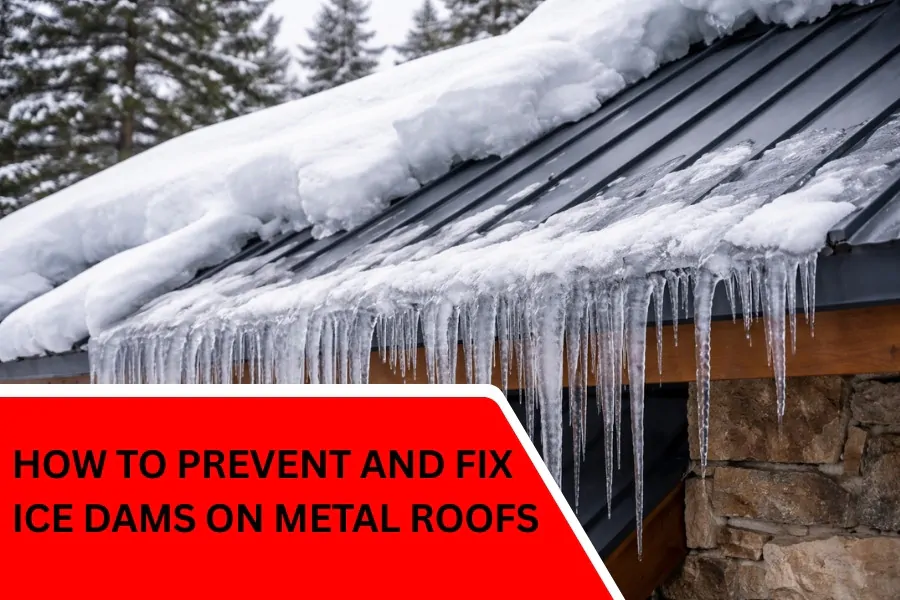
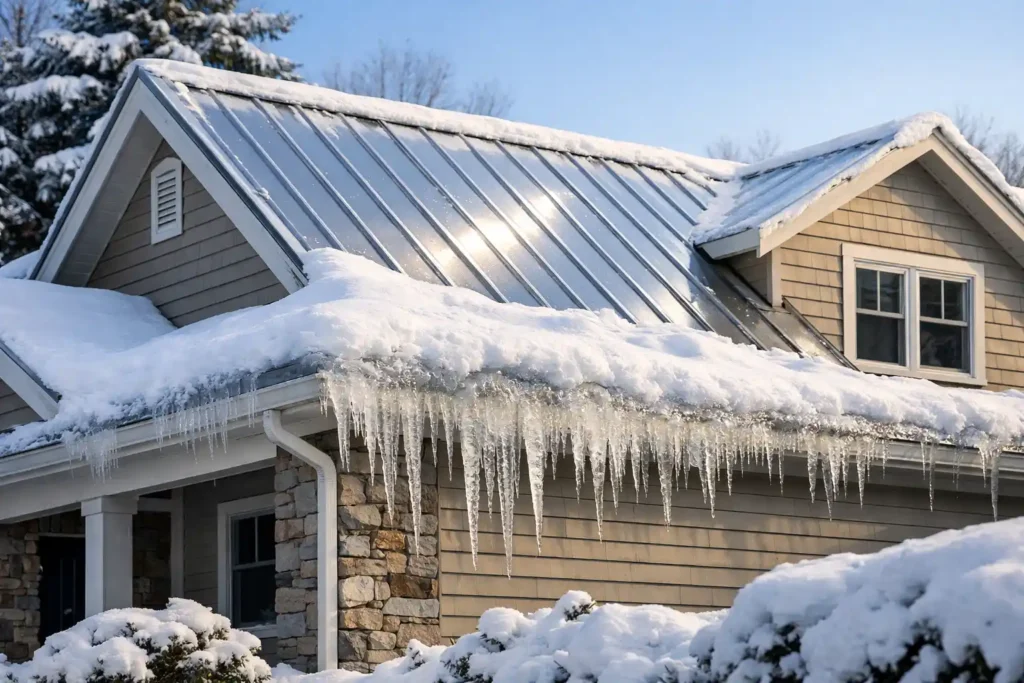
Ice dams on metal roofs are a common winter problem for homeowners in cold climates. Even though metal roofing systems shed snow more easily than other materials, ice can still accumulate along the roof edges when warm attic air melts snow and the water refreezes at the eaves. Over time, these metal roof ice dams can block proper drainage, forcing water under roofing panels and potentially causing leaks, insulation damage, and interior moisture problems.
In this guide, we explain why ice dams form on metal roofs, how to safely remove them, and the best ways to improve metal roof ice dam prevention so you can protect your home during winter.
What Causes Ice Dams on Metal Roofs?
Ice dams form when snow melts unevenly across the roof surface and refreezes near the colder edges. This frozen ridge traps melting water behind it, preventing proper drainage.
The most common causes of ice dams on metal roofs include:
- Poor attic insulation – Warm air escaping from the living space heats sections of the roof and melts snow.
- Improper attic ventilation – Without proper airflow, heat builds up in the attic and accelerates snow melting.
- Temperature fluctuations – Repeated freeze-thaw cycles during winter increase the likelihood of ice dam formation.
- Roof design features – Valleys, dormers, and low-slope areas may trap snow and contribute to ice buildup.
Even though metal roofs are more durable and efficient at shedding snow compared to traditional materials like shingle roofs, they can still experience ice dams when insulation and ventilation issues exist.
How to Fix Ice Dams on a Metal Roof
If ice dams have already formed on your roof, it is important to remove them carefully to avoid damaging your roofing system or putting yourself at risk.
1. Remove Excess Snow from the Roof
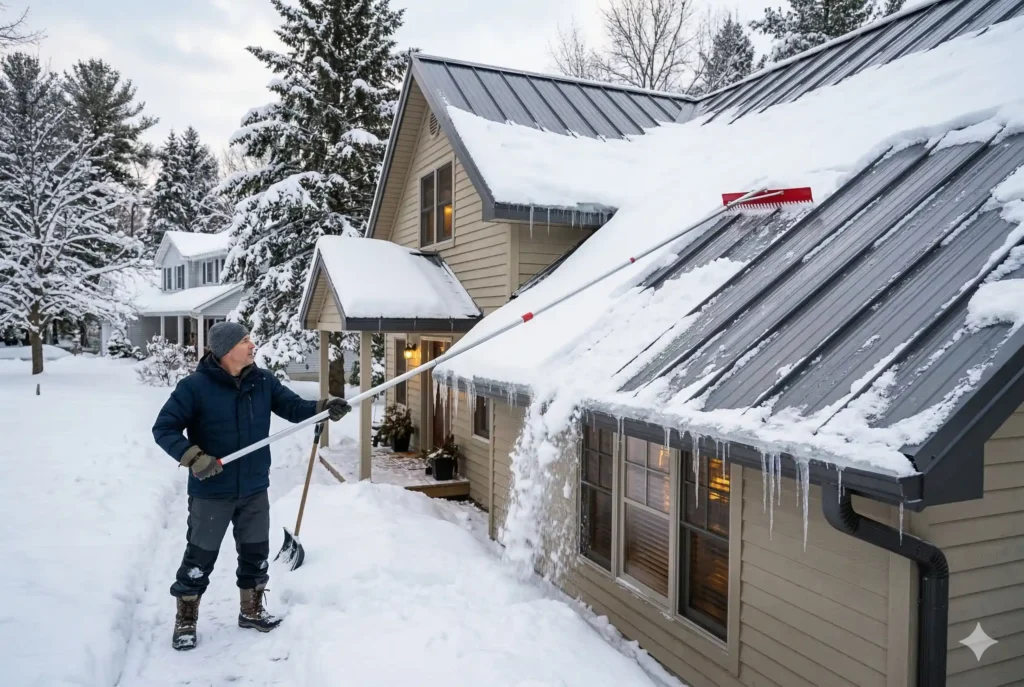
One of the safest ways to reduce ice buildup is by removing snow before it refreezes. Use a roof rake or telescoping pole to clear snow from the lower portion of the roof. This helps prevent further accumulation and reduces the chance of new ice dams forming.
2. Create Drainage Channels in the Ice
To temporarily relieve pressure from a large ice dam, you can create channels using calcium chloride ice melt. Place the material inside a fabric sock or pantyhose and lay it across the ice dam to melt a path for trapped water to escape.
Avoid using rock salt or sodium chloride because these chemicals can damage metal roofing materials and nearby gutters.
3. Improve Attic Insulation and Ventilation
Long-term metal roof ice dam prevention starts inside the attic. Proper insulation helps keep warm indoor air from escaping through the roof structure, while adequate ventilation keeps the roof surface temperature consistent.
If you suspect poor attic airflow or insulation issues, it may be helpful to inspect the attic or consult a professional roof repair specialist.
4. Seal Air Leaks in the Attic
Small openings around vents, chimneys, recessed lights, or attic hatches can allow warm air to escape into the attic space. Sealing these air leaks prevents uneven roof heating and significantly reduces the risk of ice dams forming.
5. Install Ice and Water Shield Protection
An ice and water shield membrane installed along the roof edges creates an additional waterproof barrier beneath the roofing panels. This protective layer prevents water from entering the roof structure even if ice dams temporarily block drainage.
6. Install Roof De-icing Cables
In areas with frequent ice dam problems, heated cables installed along the roof edge and gutters can help maintain drainage paths by melting snow and ice before dams form.
How to Prevent Ice Dams on Metal Roofs
Preventing ice dams is always easier and safer than removing them after they form. These steps can significantly reduce the likelihood of ice dam formation on your roof:
- Maintain proper attic insulation to prevent heat from escaping through the roof.
- Ensure balanced attic ventilation so cold air circulates and keeps the roof surface temperature consistent.
- Remove excess snow after heavy storms using safe roof raking methods.
- Inspect flashing and roof penetrations to prevent water infiltration.
- Schedule regular roof inspections to catch ventilation or insulation issues early.
If your home frequently experiences winter roofing issues, scheduling professional roof services in Ontario, Manitoba, or Alberta can help identify underlying problems before they lead to costly damage.
When to Call a Roofing Professional
Large ice dams or recurring winter roof problems may indicate deeper issues with insulation, ventilation, or roof design. In these cases, a professional inspection can help determine the most effective long-term solution.
Experienced contractors can safely remove ice dams, evaluate attic conditions, and recommend improvements that protect your roof throughout the winter season.
Conclusion
Ice dams on metal roofs may be less common than on traditional roofing systems, but they can still cause serious damage if left untreated. Understanding the causes of ice dams, improving attic insulation and ventilation, and using proper snow-removal techniques are the most effective ways to protect your roof.
With the right maintenance and preventative steps, homeowners can reduce the risk of winter roof damage and extend the lifespan of their roofing system.
Frequently Asked Questions
Do metal roofs get ice dams?
Yes. Although metal roofs shed snow more easily than other roofing materials, they can still develop ice dams if attic insulation and ventilation are not properly balanced.
What is the best way to remove ice dams from a metal roof?
The safest method is removing snow with a roof rake and using calcium chloride ice melt to create drainage channels. Avoid using sharp tools or rock salt, which can damage roofing materials.
How do you prevent ice dams on metal roofs?
Preventing ice dams involves improving attic insulation, ensuring proper ventilation, sealing air leaks, and removing excess snow after heavy winter storms.
Are heat cables effective for metal roof ice dam prevention?
Yes. Heat cables can help maintain water drainage by melting ice near the roof edges, reducing the likelihood of large ice dams forming.