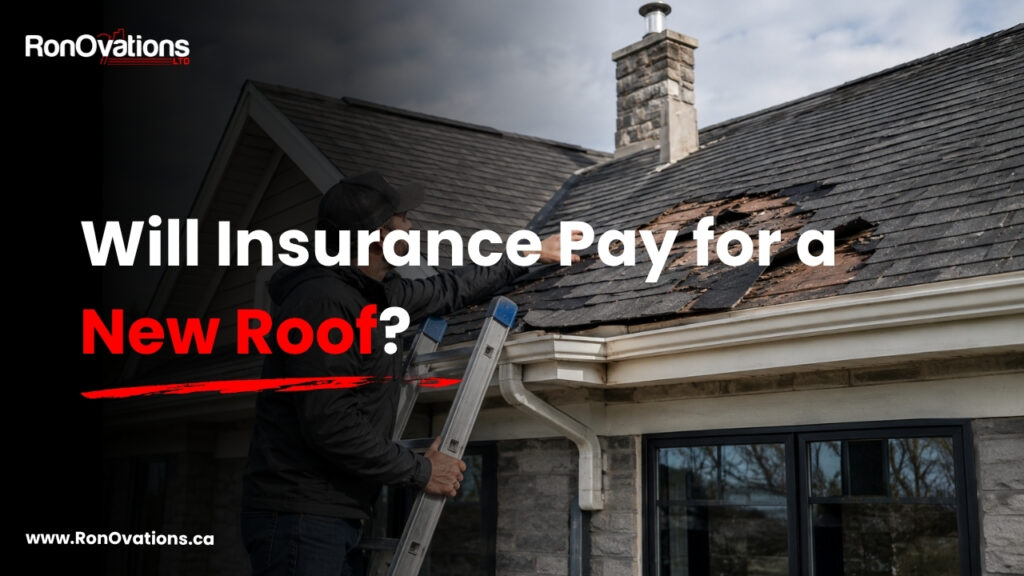
When Insurance Does and Does Not Cover Roof Replacement
Insurance covers roof replacement if the damage stems from a sudden, accidental event your policy explicitly lists as a covered peril. That’s the core rule. Windstorms, hail, fire, lightning, and falling trees are the most common triggers. The Insurance Bureau of Canada (IBC) defines insurable damage as sudden and accidental, which means gradual deterioration, aging shingles, and deferred maintenance don’t qualify.
Here’s what trips up most homeowners: they assume their policy covers any roof problem. In our experience inspecting storm-damaged roofs across southern Ontario and the Prairies, roughly half the claims we see involve at least some pre-existing wear that the adjuster flags. If your roof was already past its expected service life, the insurer may deny the claim entirely or apply heavy depreciation. Understanding whether insurance will cover roof replacement starts with knowing your policy type and your roof’s current condition.
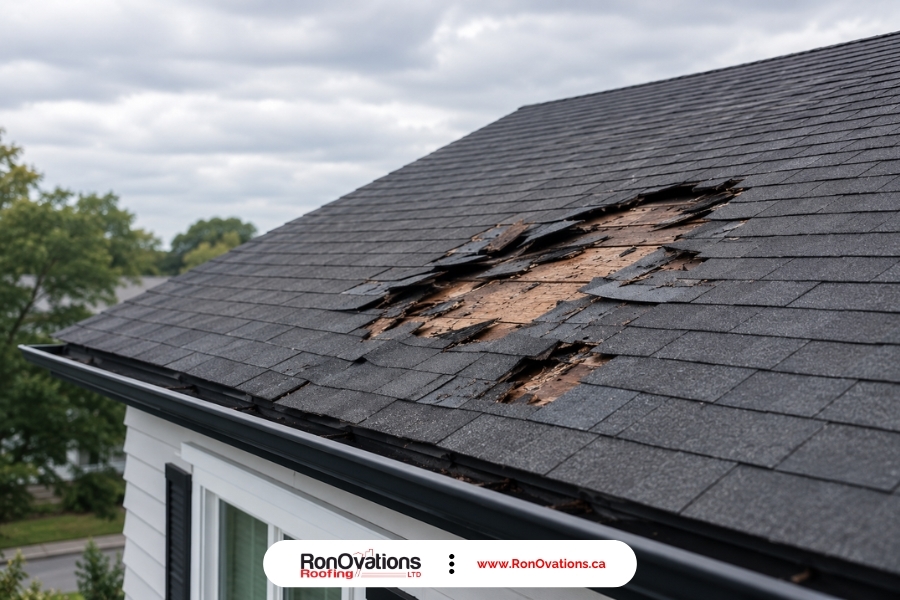
Covered Perils vs. Exclusions: The Full Breakdown
What Perils Are Typically Covered?
Standard homeowner policies in Canada cover these sudden events:
- Windstorm and hail – the most frequent roof-damage perils, especially in Alberta’s hail belt and Manitoba’s tornado corridor
- Fire and lightning
- Falling objects (trees, branches, debris)
- Weight of ice and snow – though some policies limit this or require an endorsement
- Vandalism
- Vehicle or aircraft impact
What Exclusions Should You Watch For?
Exclusions are where claims fall apart. Common ones include:
- Wear and tear / gradual deterioration – the single biggest reason claims get denied
- Faulty workmanship – if a previous roofer installed shingles incorrectly, that’s not a covered peril
- Flood and overland water – requires a separate endorsement in most provinces
- Earthquake – separate endorsement, mainly relevant in BC
- Cosmetic damage – some Alberta policies now include cosmetic-damage exclusions for hail dents on metal or impact-resistant shingles
- Neglected maintenance – if you ignored a small leak for years and it caused structural rot, the insurer won’t pay
We’ve seen adjusters pull up satellite imagery from previous years to prove damage existed before the claimed storm event. Keep your roof maintained and document its condition annually.
ACV vs. RCV: How Your Policy Type Affects Your Payout
The difference between Actual Cash Value (ACV) and Replacement Cost Value (RCV) policies is the single biggest factor in how much money you’ll actually receive. Here’s how they compare:
| Factor | ACV Policy | RCV Policy |
|---|---|---|
| Payout basis | Replacement cost minus depreciation | Full cost to replace with like-kind materials |
| Roof age impact | Older roof = much lower payout | Age matters less; full replacement covered |
| Typical scenario (15-year-old roof, $15,000 replacement) | Payout may be $6,000-$8,000 after depreciation | Payout up to $15,000 (minus deductible) |
| Premium cost | Lower monthly premiums | Higher monthly premiums |
| Best for | Newer roofs where depreciation is minimal | Any roof, especially those over 10 years old |
I always tell homeowners to check their declarations page before storm season. If you’re carrying an ACV policy on a 20-year-old asphalt roof, you could be looking at a payout that covers less than half the average cost of roof replacement, which currently runs $8,000 to $16,000 CAD for a standard 1,200-1,800 sq ft bungalow in Ontario or Manitoba.
How Roof Age and Material Affect Insurance Coverage
Does Roof Age Determine Whether You’re Covered?
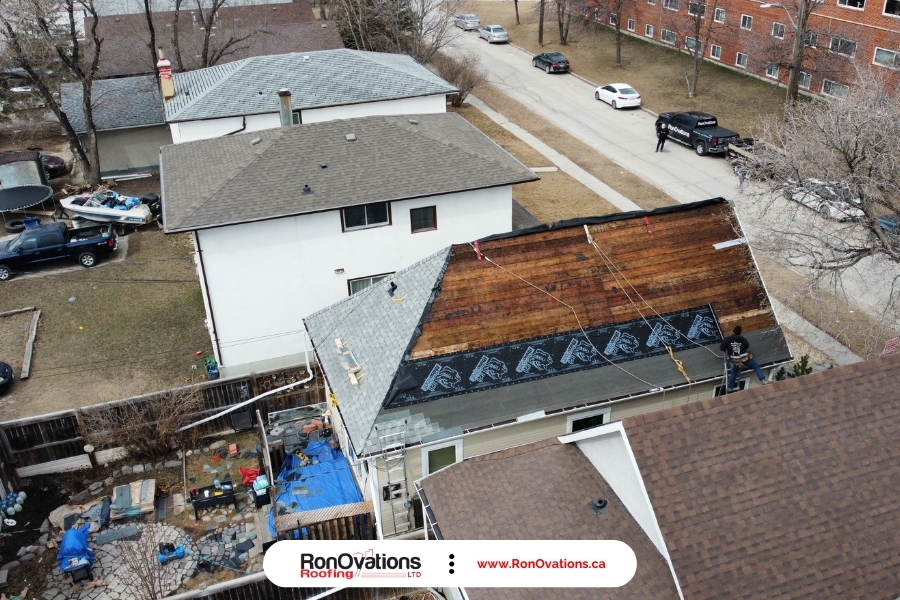
Technically, age alone doesn’t void coverage. But practically, it changes everything. Many insurers apply depreciation schedules that reduce payouts as roofs age. Some won’t renew policies if the roof exceeds 20-25 years without inspection. In Alberta, several insurers now require a roof inspection before issuing or renewing coverage on homes with roofs over 15 years old.
From what we’ve seen on job sites, a well-maintained IKO Cambridge or Owens Corning Duration shingle roof can last 20-25 years in Ontario’s climate. But if you’re at year 18 and a windstorm tears off a section, the adjuster will factor that age into the depreciation calculation on an ACV policy.
How Does Roofing Material Influence Claims?
Material matters for both durability and claim outcomes. Impact-resistant shingles like GAF Timberline HDZ (Class 4 rated) or IKO Dynasty with ArmourZone can reduce hail damage and may qualify you for insurance discounts of 5-15% in hail-prone regions. Decra stone-coated steel panels offer even greater impact resistance and longevity, which can simplify claims since there’s less damage to dispute.
If you’re wondering how much is a metal roof, expect to pay $14,000 to $28,000 CAD for a typical Ontario home. The cost of metal roof in Ontario varies by profile and gauge, but the longer lifespan (40-60 years) means fewer claim complications over time. Metal roofs also perform well in wind uplift tests required under the Ontario Building Code (OBC) Section 9.26, which specifies fastening requirements based on wind exposure.
The Insurance Claim Process: Step by Step
Having guided dozens of homeowners through the claims process, here’s the sequence that works best:
- Document the damage immediately. Take photos and video from the ground and, if safe, from a ladder. Timestamp everything.
- Prevent further damage. Tarp the roof or board up openings. Insurers expect you to mitigate, and they’ll cover reasonable emergency roof repair costs. In Winnipeg, emergency tarping typically runs $300-$800 CAD depending on the area affected.
- File your claim promptly. Most policies require notification within a reasonable timeframe. Don’t wait weeks.
- Get an independent roofing estimate. Don’t rely solely on the adjuster’s assessment. A qualified roofer can identify damage the adjuster might miss, especially on the decking and underlayment.
- Meet the adjuster on-site. Have your roofer present if possible. We’ve found that claims where the roofer and adjuster inspect together result in more accurate assessments.
- Review the scope of loss. Compare the adjuster’s line-item estimate against your roofer’s quote. Common gaps include drip edge, ice-and-water shield, and code-required upgrades.
- Negotiate if needed. If the payout seems low, you can request a re-inspection or hire a public adjuster.
Can a Roof Be Repaired Instead of Replaced on an Insurance Claim?
Yes, and insurers generally prefer it. If damage is limited to one slope or a small section, the adjuster will likely approve a repair rather than full replacement. The question of whether a roof can be repaired instead of replaced depends on the extent of damage, the roof’s age, and whether matching shingles are available.
Here’s where it gets tricky: if your shingles have been discontinued (common with older BP Mystique colour runs or legacy CertainTeed Landmark profiles), a partial repair may result in a visible mismatch. Some policies include a “matching” clause that requires the insurer to replace enough material to maintain a uniform appearance. Check your policy wording carefully.
From a structural standpoint, we won’t repair a roof if the decking shows signs of rot or if more than 30% of the shingles are compromised. At that point, replacement is the only responsible option, and most adjusters agree.
Provincial Differences That Affect Roof Insurance Claims
How Do Claims Differ in Ontario vs. Alberta vs. Manitoba?
Provincial building codes, weather patterns, and insurance market conditions create real differences in how claims play out:
- Ontario: The OBC (Section 9.26) governs roof installations and requires ice-and-water membrane in eave areas. Wind and ice storms are the primary claim triggers. Deductibles typically range from $1,000 to $2,500 CAD. Permit requirements vary by municipality but are generally required for full replacements.
- Alberta: Hail is the dominant peril. Calgary and surrounding areas see some of the highest hail-damage claim volumes in Canada. The Alberta Building Code (ABC) mirrors the National Building Code (NBC) with regional amendments. Cosmetic-damage exclusions are increasingly common. Deductibles for wind/hail can reach $5,000 or more.
- Manitoba: Severe thunderstorms and occasional tornadoes drive claims. The Manitoba Building Code (MBC) follows the NBC framework. Winnipeg’s freeze-thaw cycles also cause ice damming, though this is often classified as maintenance rather than a covered peril.
Does a New Roof Help with Insulation and Energy Efficiency?
This question comes up constantly during replacement projects, and the answer is yes. A new roof installation is one of the best opportunities to upgrade attic insulation and ventilation. While insurance won’t pay for insulation upgrades (that’s a betterment, not damage repair), the work is easier and cheaper to do while the roof deck is exposed.
Modern underlayments and properly installed ridge-and-soffit ventilation systems reduce ice damming, which in turn reduces future insurance claims. We’ve measured attic temperature differences of 10-15°C between homes with proper ventilation and those without. If you’re asking whether a new roof helps with insulation, the roof itself provides a modest R-value improvement, but the real gains come from adding or upgrading attic insulation to R-60 (the current NBC recommendation for most Canadian climate zones) during the re-roofing process.
How to Maximize Your Insurance Payout
What Documentation Should You Keep?
The homeowners who get the best outcomes are the ones who document everything before damage occurs. Keep these on file:
- Original roofing contract and invoice (proves installation date and materials used)
- Manufacturer warranty registration (shows the product spec, e.g., GAF Timberline HDZ or Owens Corning Duration)
- Annual roof inspection photos (even smartphone photos with dates help)
- Maintenance records (gutter cleaning, flashing repairs, etc.)
- Previous claim history
Should You Hire a Public Adjuster?
If your claim exceeds $15,000 or if you feel the insurer’s estimate is significantly low, a public adjuster can be worth the 10-15% fee they charge. They work for you, not the insurance company. In our experience, public adjusters are most valuable on complex claims involving multiple trades (roofing, siding, interior water damage) where the insurer’s initial scope misses items.
Common Mistakes That Get Roof Claims Denied
After years of working alongside adjusters and homeowners, these are the mistakes we see most often:
- Filing a claim for a roof that was already failing. If your shingles were curling and granule loss was visible before the storm, the adjuster will attribute the damage to wear, not the peril.
- Not mitigating further damage. If you don’t tarp a damaged roof and rain causes interior water damage, the insurer may deny the secondary damage.
- Signing a contract with a storm chaser before filing the claim. Some contractors include assignment-of-benefits clauses that complicate the process. Always file your claim first.
- Accepting the first estimate without review. Adjuster estimates sometimes omit code-required upgrades like ice-and-water shield or proper ventilation per OBC Section 9.26.
- Waiting too long to file. Delays raise suspicion and can void coverage under some policy terms.
Flat Roof and Commercial Considerations
If you own a commercial property or a home with a flat roof section, the insurance dynamics shift. Flat roofs using Mule-Hide TPO or Carlisle EPDM membranes have different failure modes than sloped shingle roofs. Ponding water, membrane shrinkage, and seam failures are common, but insurers often classify these as maintenance issues rather than covered perils.
Wind damage to flat roofs is covered, but proving it can be harder since the damage is less visually obvious than missing shingles. We recommend annual thermographic scans for flat roofs, which can detect moisture intrusion beneath the membrane before it becomes a major problem. These scans cost $400-$800 CAD and provide documentation that strengthens future claims.
Frequently Asked Questions
Will insurance cover my roof if it’s over 20 years old?
Coverage isn’t automatically voided at 20 years, but your payout will likely be reduced significantly on an ACV policy due to depreciation. Some insurers require an inspection before renewing coverage on older roofs. If the roof passes inspection, you’ll maintain coverage, but the payout for a claim will reflect the roof’s remaining useful life.
Does filing a roof claim increase my premiums?
Usually, yes. Expect a 5-20% premium increase after a claim, depending on your insurer and claims history. In Alberta, where hail claims are frequent, some insurers offer claim-free discounts that you’ll lose. Weigh the claim amount against the long-term premium increase before filing smaller claims.
Can my insurer force me to use a specific roofing contractor?
No. In all Canadian provinces, you have the right to choose your own contractor. Your insurer may have a preferred vendor list, but you’re not obligated to use it. Choose a contractor who understands the claims process and can work with your adjuster on scope and pricing.
What if my claim is denied?
You can appeal through your insurer’s internal dispute process, escalate to your provincial insurance ombudsman, or hire a public adjuster or lawyer. Document everything and get a second opinion from an independent roofer before accepting a denial.
Making Sense of Insurance and Roof Replacement
Whether insurance will cover roof replacement comes down to three factors: the cause of damage (sudden peril vs. gradual wear), your policy type (ACV vs. RCV), and the documentation you can provide. Provincial building codes like the OBC, ABC, and MBC add another layer by requiring specific materials and methods that may or may not be included in your adjuster’s initial estimate. The best protection is a well-maintained roof, an RCV policy, and thorough records of your roof’s age, materials, and condition. If you’re weighing whether to file a claim, get an independent roofing assessment first so you understand the full scope before the adjuster arrives.