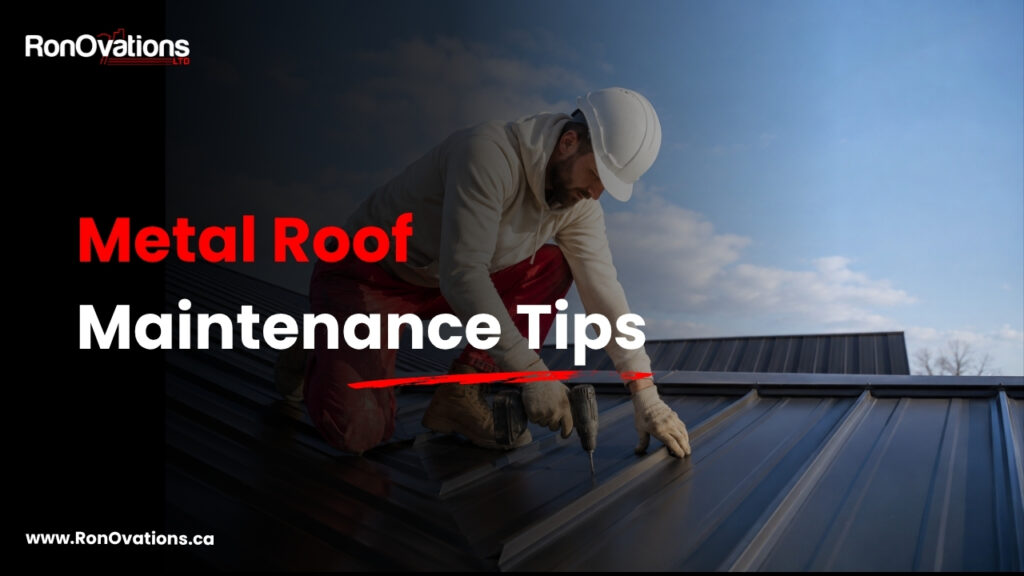
Why Metal Roofs Still Need a Maintenance Schedule
Metal roofing isn’t optional to maintain, even on a system rated for half a century. Every metal panel expands and contracts with temperature swings. In Ontario alone, a roof surface can swing from -30 C in January to +65 C on a dark July afternoon. That’s nearly 100 degrees of thermal movement, and it happens hundreds of times per year. Fasteners loosen. Sealants fatigue. Coatings degrade. Without a maintenance schedule, a 50-year roof becomes a 25-year roof with a leak problem.
Do metal roofs need maintenance if they’re rated for 50 years?
Yes. The 50-year rating assumes proper installation and ongoing care. Since 2012, our crews have inspected metal roofs across three provinces, and we’ve found the same preventable failures over and over. Exposed-fastener systems are especially vulnerable because every screw penetration is a potential leak point. Standing seam panels hide their fasteners, but they still rely on clips, sealants, and coatings that degrade over time. The bottom line: no metal roof is maintenance-free, but the maintenance requirements are lighter than asphalt shingles when you stay on schedule. Our roofing company in Coldwater.
How often should a metal roof be inspected in Canada?
At minimum, twice a year. Spring inspections catch what winter broke. Fall inspections seal everything up before freeze-thaw cycles begin again. This schedule aligns with the Ontario Building Code (OBC) Section 9.26, which addresses general requirements for maintaining roof structural integrity and weather protection. If you’ve had a major weather event, such as a hailstorm, ice storm, or sustained winds above 90 km/h, add an extra inspection after that event. We’ve seen homeowners skip the fall check and then discover in February that a single cracked sealant bead let enough water in to rot an entire section of sheathing. Roofing work in Parry Sound.
The Three Failure Patterns Most Guides Skip
Generic metal roof maintenance guides tell you to “inspect your roof regularly.” That’s not wrong, but it’s not useful either. Here’s what you’re actually looking for, based on the patterns we document during tear-offs and warranty inspections. What to do after roof storm damage.
What are the most common metal roof failures after 10 years?
Three failures dominate, and they’re interconnected. Best metal roof for residential homes, field-tested.
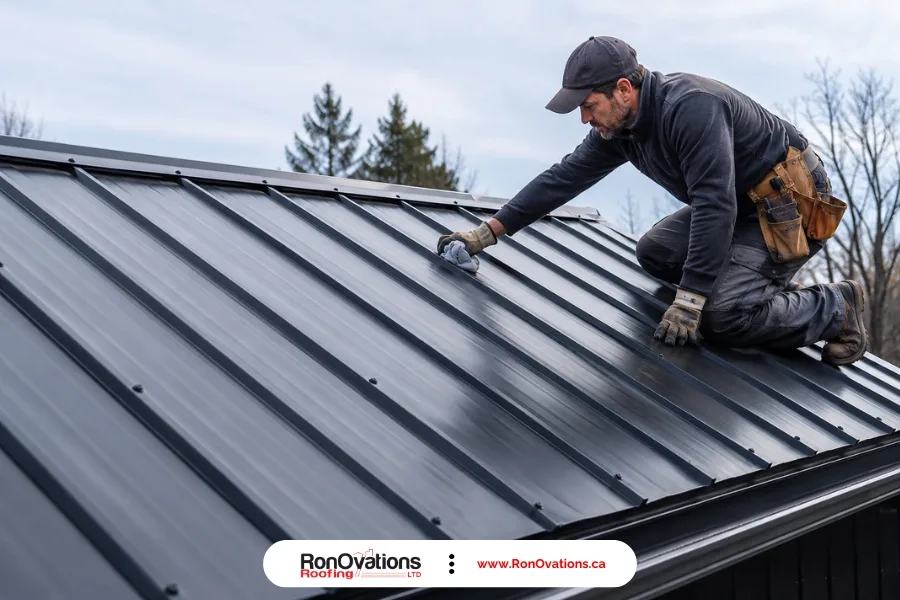
- Fastener back-out. Thermal cycling loosens exposed screws gradually. On tear-offs of 15-year-old exposed-fastener roofs, we routinely find 10 to 15 percent of screws backed out far enough to let water past the EPDM washer. You won’t always see this from the ground. You’ll feel it by running your hand along the panel surface.
- Sealant degradation. Butyl and silicone sealants at panel laps, transitions, and pipe boots crack after 7 to 12 years. The sealant turns chalky, develops hairline gaps, and stops being waterproof. This is the single most common source of metal roof leaks we encounter.
- Coating failure. Premium Kynar 500 (PVDF) coatings can last 30 to 40 years, but cheaper acrylic and polyester coatings start chalking and fading after 10 to 15 years. Once the coating breaks down, the steel underneath corrodes faster, especially on cut edges where the galvalume layer was compromised during installation.
These three issues account for the vast majority of metal roof service calls we handle. Catch them early and you’re looking at a tube of sealant and a box of screws. Miss them and you’re replacing panels. How long does a roof last in Canada.
Spring Inspection: What Winter Left Behind
What should you look for on a metal roof after winter?
Spring is your damage-assessment season. Canadian winters are hard on metal roofs, and the freeze-thaw transition in March and April is when most problems reveal themselves. Here’s a practical spring checklist:
- Check eaves for ice dam damage, including bent drip edges, lifted panels, and damaged eavestrough hangers.
- Inspect every exposed fastener for back-out. A screw that’s lifted even 2 mm has broken its seal.
- Look for dents or creases from ice slides and branch impact.
- Clear debris from valleys and transitions where snowmelt pooled and left organic material behind.
- Examine pipe boots and vent flashings for cracked rubber collars.
- Check eavestrough attachment points, since ice loading often pulls hangers loose from fascia boards.
One thing we’ve learned from over a decade of spring inspections across Ontario and Manitoba: you’ll often feel a backed-out screw before you see it. Run your palm along the panel ribs. Any raised head needs attention before the next rain. Full roof inspection checklist.
Summer: Cleaning, Coating Checks, and When to Wash
Can you pressure wash a standing seam metal roof safely?
You can, but you shouldn’t default to it. Keep pressure under 1,500 PSI and use a 40-degree fan tip. Anything more aggressive strips Kynar 500 and acrylic coatings and can void manufacturer warranties. We’ve seen homeowners rent a 3,000 PSI unit from a big-box store and blast the finish right off their panels. That’s an expensive mistake.
A soft-wash approach works better for routine metal roof cleaning: garden hose, mild detergent (dish soap works), and a soft-bristle brush on a telescoping pole. Never use bleach-based cleaners on galvalume panels. Bleach accelerates corrosion of the aluminum-zinc alloy coating. For stubborn algae or moss stains, a 50/50 mix of water and white vinegar is effective and safe. How to clean your roof safely.
What’s the best way to clean a tin roof without damaging the finish?
Start at the ridge and work down so dirty runoff doesn’t streak clean panels. Rinse thoroughly. Summer is also the right time to check your panels’ chalk and fade ratings. Rub a dark cloth across the surface. If it picks up a white powdery residue, your coating is chalking. Some chalking is normal after 15-plus years on Kynar 500 finishes, but heavy chalking on a younger roof suggests a lower-grade coating that may need recoating sooner than expected for optimal thermal performance.
Fall Prep: Getting Your Metal Roof Ready for Canadian Winter
How do you prepare a metal roof for snow and ice?
Fall is the most important inspection season. Every sealant crack you miss in October becomes a leak in February. Here’s what our crews prioritize during fall metal roof maintenance:
- Re-torque all exposed fasteners. Use a calibrated torque setting, not just “snug.” Over-torquing crushes the EPDM washer and creates a new leak point.
- Replace any cracked or chalky sealant at panel laps, transitions, and penetrations. Use a high-quality butyl or polyurethane sealant rated for -40 C.
- Confirm snow guards are secure. Loose snow guards become projectiles during roof avalanches.
- Clear all valleys, gutters, and downspouts. Blocked drainage causes ice dams, and ice dams cause panel damage.
- Inspect attic ventilation. Poor ventilation leads to condensation on the underside of metal panels, which accelerates corrosion from below, a failure mode that’s invisible from outside.
If you’re only going to do one inspection per year, make it the fall one. The cost of a fall tune-up is a fraction of what a mid-winter emergency repair costs when everything is frozen and access is dangerous. Ice dam prevention guide.
Winter: What You Can and Can’t Do Safely
Winter is primarily an observation season. Don’t walk on a metal roof when it’s covered in ice or snow. The risk of a fall isn’t worth it, and you can damage panels by concentrating your weight on frozen, brittle sealants. Winter roof maintenance tips.
What you can do: monitor from inside the attic for active leaks, water stains, or condensation on the underside of the deck. If snow accumulation exceeds your roof’s design load (check your truss engineering specs or local building code requirements under the National Building Code of Canada), use a roof rake from the ground to clear the lower 1 to 1.5 metres. Don’t scrape the rake directly on the panel surface. Leave a thin layer of snow as a buffer to protect the coating.
Exposed-Fastener vs. Standing Seam: Different Maintenance Needs
How do you fix exposed-fastener screw holes that leak?
Remove the old screw, clean the hole, apply a bead of butyl sealant, and install a slightly larger diameter screw with a fresh EPDM washer. If the hole is elongated from thermal movement (common on long panel runs), relocate the fastener 25 mm away and seal the old hole with a metal patch and polyurethane sealant. Don’t just caulk over a backed-out screw and call it done. That’s a temporary fix that fails within one season. Roof leak repair guide.
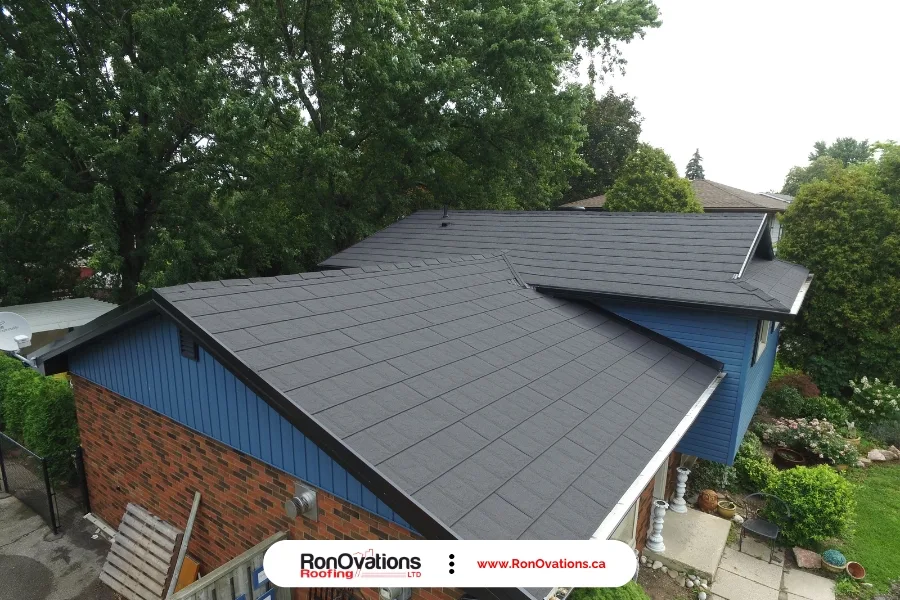
Standing seam systems like Decra stone-coated steel panels don’t have exposed fasteners, so they avoid this entire category of failure. But they still need clip inspections, sealant checks at transitions, and coating maintenance. The trade-off is higher upfront cost for lower long-term maintenance, which is why we often recommend standing seam for homeowners who want a true low-maintenance metal roof. When comparing how much does metal roofing cost between the two systems, the metal roof installation cost for standing seam runs 30 to 50 percent higher, but the lifetime maintenance savings often close that gap.
| Maintenance Task | Exposed-Fastener Roof | Standing Seam Roof | Frequency |
|---|---|---|---|
| Fastener re-torque | Required every spring and fall | Not applicable | Twice yearly |
| Sealant inspection and replacement | All laps, penetrations, transitions | Transitions and penetrations only | Twice yearly |
| Coating/finish check | Chalk and fade test annually | Chalk and fade test annually | Annually |
| Panel clip inspection | Not applicable | Check for clip disengagement | Annually |
| Gutter and valley clearing | Required | Required | Twice yearly |
| Estimated annual maintenance cost | $300 – $600 CAD | $200 – $400 CAD | Yearly |
Does a Metal Roof Need to Be Re-Coated or Repainted?
How do you know when a metal roof coating is failing?
Coating failure shows up as chalking (white powdery residue on the surface) and colour fading. Premium Kynar 500 (PVDF) coatings resist this for 30 to 40 years. Cheaper polyester and acrylic coatings can start failing after 10 to 15 years, especially on south-facing roof planes that take the most UV exposure.
If your coating is failing, recoating is far less expensive than panel replacement. Professional recoating typically runs $3 to $6 per square foot in Ontario, compared to $9 to $16 per square foot for full panel replacement. The recoating process involves cleaning, priming bare spots, and applying a new elastomeric or acrylic coating. It’s not a DIY job. Improper prep leads to peeling within two years. Roof replacement cost in Ontario.
How Much Is a Metal Roof Compared to Ongoing Maintenance Costs?
Is it cheaper to maintain a metal roof or replace panels later?
It’s dramatically cheaper to maintain. Understanding how much is a metal roof upfront helps frame the value of ongoing care. Here’s a real comparison based on the cost of metal roof Ontario homeowners can expect:
| Scenario | Estimated Cost (CAD) | Frequency |
|---|---|---|
| Annual maintenance (inspection, re-torque, sealant touch-up) | $200 – $600 | Yearly |
| Single panel replacement (material + labour) | $500 – $1,500 | As needed |
| Full recoating (average 1,500 sq ft roof) | $4,500 – $9,000 | Every 20-30 years |
| Complete metal roof replacement | $13,500 – $24,000 | Every 40-70 years |
A homeowner who spends $400 per year on maintenance over 50 years invests $20,000 total and likely never replaces the roof. A homeowner who skips maintenance might face a $15,000 to $24,000 replacement at year 25. The math isn’t close. Roofing cost calculator.
Metal Roof Myths That Lead to Bad Maintenance Habits
Do metal roofs attract lightning?
No. Metal conducts electricity but doesn’t attract lightning strikes. A metal roof actually disperses energy across its surface rather than concentrating it at a single point, and it won’t ignite the way wood shakes or asphalt can. The National Building Code of Canada (NBC) classifies metal roofing favourably for fire resistance. If anything, a metal roof is safer during a lightning event.
Is it true that metal roofs don’t need any maintenance?
This is the most damaging myth in the roofing industry. No roof is maintenance-free. Metal roofs require less maintenance than asphalt shingles like GAF Timberline HDZ or Owens Corning Duration, but “less” doesn’t mean “none.” We’ve torn off metal roofs that failed at 20 years because the homeowner believed the “zero maintenance” marketing and never once checked a fastener or sealant joint. That’s an expensive lesson. Two inspections per year and a few hundred dollars in materials can add decades to your roof’s life.
Frequently Asked Questions
Do metal roofs need maintenance?
Yes. Metal roofs are lower-maintenance than asphalt shingles, but they still need regular attention. Exposed fasteners back out from thermal cycling, sealants crack after 7 to 12 years, and coatings eventually chalk and fade. Inspect twice a year in spring and fall, and you’ll catch these issues before they cause leaks or require expensive panel replacement.
How often should you inspect a metal roof in Canada?
At minimum, twice a year: once in spring after freeze-thaw stress and ice dam season, and once in fall before winter sets in. Spring catches what winter broke. Fall is your last chance to re-seal and re-torque before everything freezes. If you’ve had a major storm with hail, high winds, or heavy ice, add an extra inspection after that event.
Can you pressure wash a standing seam metal roof?
You can, but keep the pressure under 1,500 PSI and use a wide fan tip. High-pressure washing strips Kynar 500 and acrylic coatings and can void manufacturer warranties. A soft-wash approach with a garden hose, mild detergent, and a soft-bristle brush is safer and usually sufficient. Never use bleach-based cleaners on galvalume panels.
Do metal roofs attract lightning?
No. Metal conducts electricity but doesn’t attract lightning strikes. A metal roof disperses energy across its surface rather than concentrating it, and metal won’t catch fire the way wood shakes or other combustible materials can. The National Building Code of Canada classifies metal roofing favourably for fire resistance.
How much does a metal roof cost in Ontario?
Exposed-fastener metal roofs typically cost $9 to $12 per square foot installed in Ontario, while standing seam systems run $12 to $16 per square foot. Stone-coated steel products like Decra fall in the $11 to $15 range. These prices include materials, labour, and standard underlayment but not structural repairs or tear-off of existing roofing.
Does a metal roof need to be re-coated or repainted?
It depends on the coating. Kynar 500 (PVDF) finishes can last 30 to 40 years before needing attention. Cheaper polyester and acrylic coatings may need recoating after 10 to 15 years. Recoating costs $3 to $6 per square foot, which is significantly less than full panel replacement. Watch for chalking and fading as early indicators.
A well-maintained metal roof is one of the best long-term investments you can make in your home. The key isn’t complicated: inspect in spring and fall, re-torque fasteners, replace cracked sealant, and address coating issues before they expose bare steel. Follow this season-by-season calendar and your metal roofing system should comfortably outlast the mortgage, delivering the full 40-to-70-year lifespan that makes the higher upfront cost worthwhile.