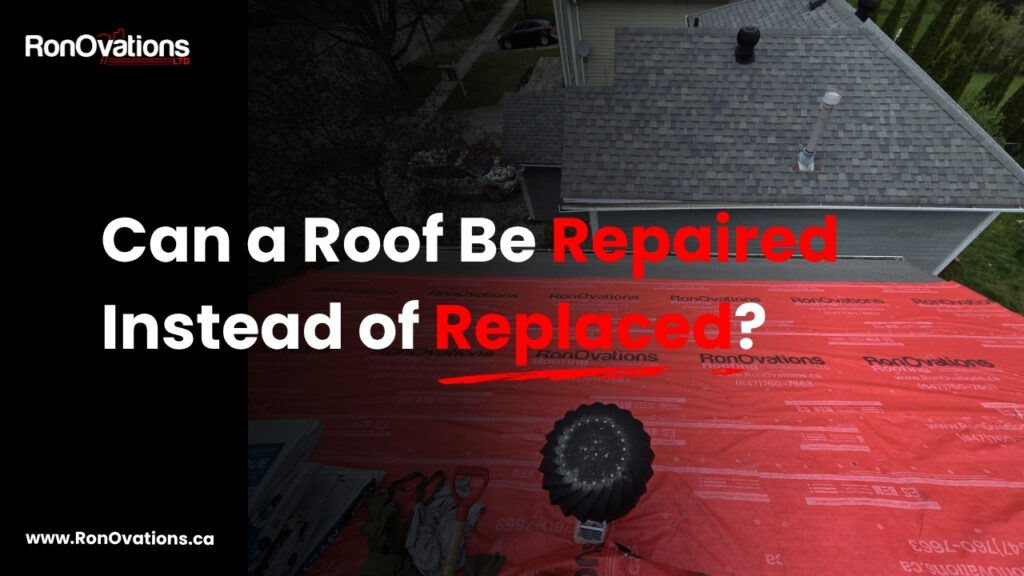
Quick answer: A roof can be repaired instead of replaced if damage covers less than 25-30% of the surface area, the decking is dry and structurally sound, and the existing shingles have roughly 8-10 years of life remaining. Ontario Building Code rules require a full tear-off if two shingle layers already exist.
Repair vs. Replace: The Core Question
A roof can be repaired instead of replaced when damage affects less than 25-30% of the total surface, the decking is structurally sound, and the shingles have at least 8-10 years of useful life remaining. In our project work across Ontario since 2012, we’ve seen plenty of homeowners assume a few missing shingles mean a full tear-off. Often they don’t. But sometimes a small leak hides rotten decking that changes the math entirely.
The Ontario Building Code (OBC), specifically Section 9.26, governs roof covering requirements. If a second layer of shingles already sits on your roof, a repair overlay isn’t permitted. You’ll need a complete replacement. That single code detail has shifted many repair conversations into replacement territory on homes we’ve inspected.
When is a roof repair the smarter financial choice?
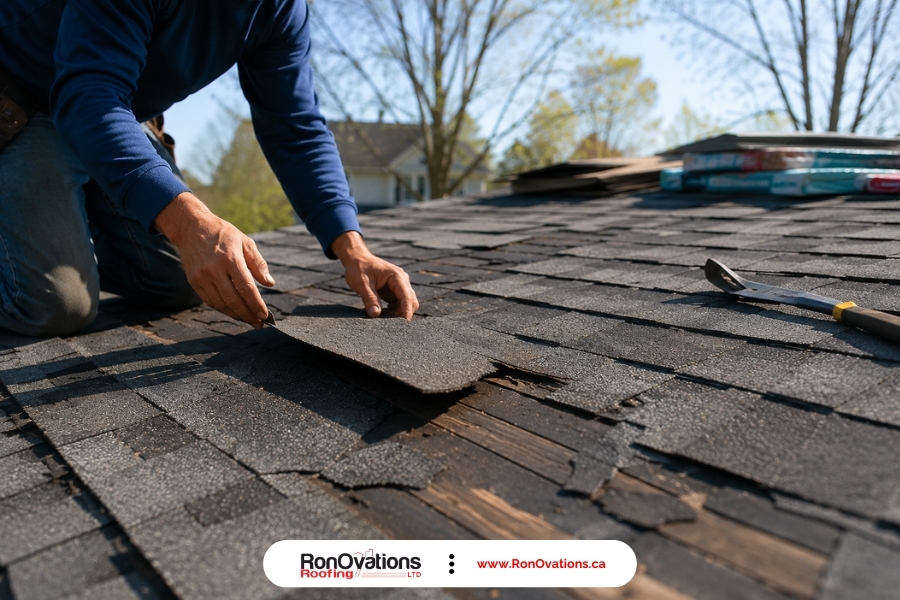
Repair wins when the damage is localized. Think a single slope hit by wind, one failed flashing boot around a plumbing vent, or a handful of shingles torn off in a storm. If the rest of the roof is performing well and you’re looking at 8-10 more years before end-of-life, spending $400-$2,500 CAD on a targeted fix from qualified professionals beats a $12,000 replacement every time.
How do you know if your roof is too far gone for a patch?
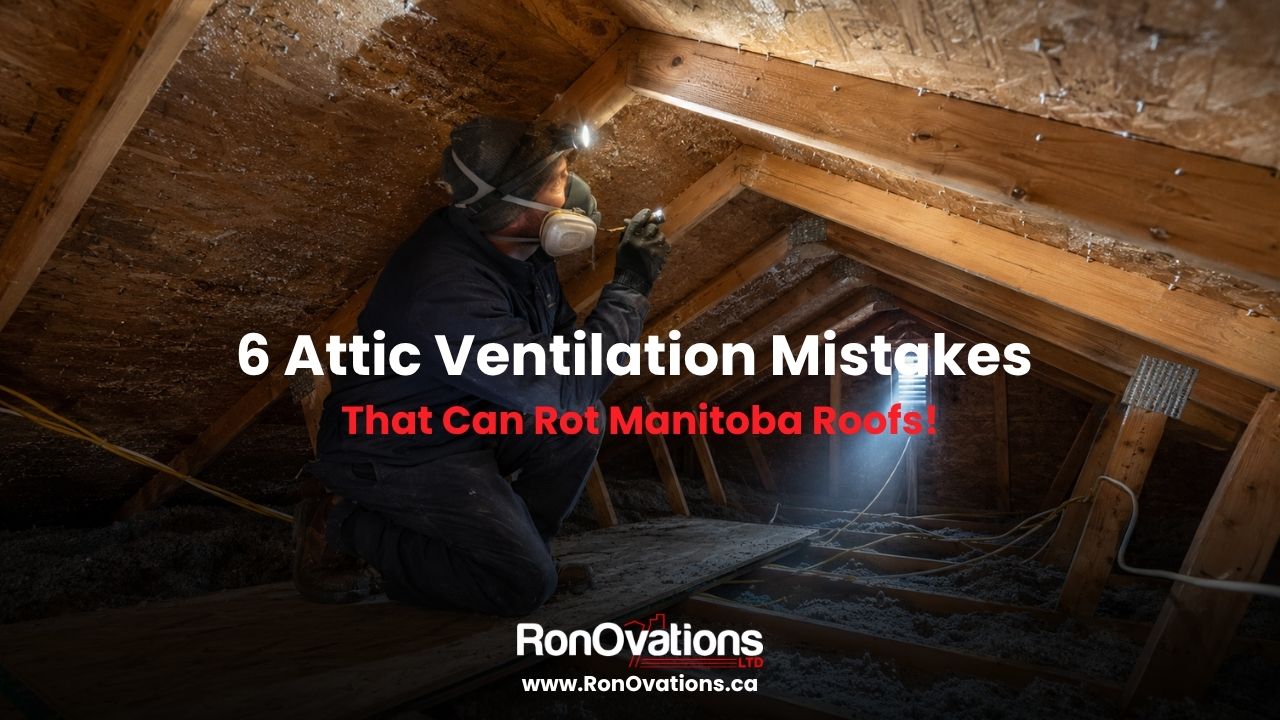
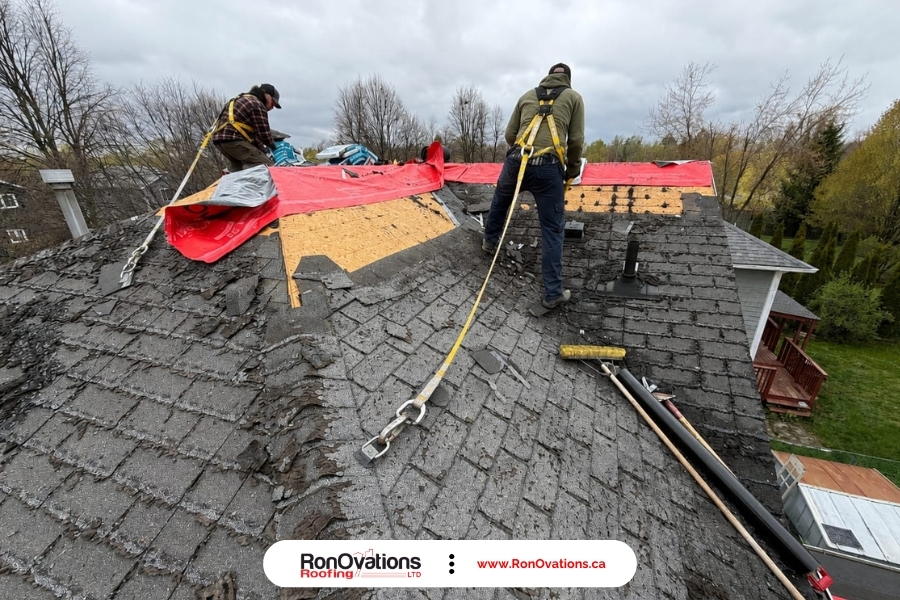
Walk your attic with a flashlight. If you see daylight through the decking, feel soft spots underfoot, or notice dark staining on the sheathing, you’re past patch territory. Outside, look for widespread granule loss, curling across multiple slopes, and cracked or lifted flashing at chimneys and walls. A roof over 20 years old showing two or more of these signs is almost always a replacement candidate.
Five Warning Signs That Push a Roof Past Repair
Catching these early saves money. Ignoring them doubles the bill.
What does granule loss in your gutters actually mean?
Those sandy granules in your eavestroughs are the UV-protective layer of your asphalt shingles. Losing them accelerates aging fast. If your gutters look like a beach after every rain, the shingles are nearing end-of-life, and no patch will reverse that degradation.
- Sagging or soft decking: Step on the roof and feel a spongy give? That’s moisture-damaged plywood or OSB underneath. A patch over rotten decking is like painting over mould.
- Multiple flashing failures: One cracked flashing is a repair. Three or four failing at the same time signals the sealants and metals have aged out system-wide.
- Recurring ice dam damage: If ice dams form despite proper attic ventilation, the underlayment may be degraded. We’ve pulled back shingles on pre-1990 Ontario homes and found zero ice-and-water shield along the eaves, because it wasn’t required back then.
- Age past 20 years with compounding issues: Most asphalt shingle roofs in Ontario last 18-25 years. An IKO Cambridge or Owens Corning Duration roof at year 22 with curling, granule loss, and a valley leak isn’t worth another patch.
Our crews have watched homeowners patch the same valley three winters running before accepting a replacement. By then, the decking damage had doubled the final cost. Honestly, that $800 they saved each year ended up costing them an extra $3,000. After 14 years of seeing this pattern repeat, we always recommend getting a full inspection before committing to a third repair on the same area.
What Does Each Option Actually Cost in Ontario?
How much does a typical roof repair cost compared to a full replacement?
Here are real-world CAD ranges based on what we see across Ontario projects. Understanding the average cost of roof replacement helps you weigh repair against a full tear-off:
- Localized shingle repair: $400-$2,500 CAD. Covers a few missing or damaged shingles, a single flashing replacement, or a small section re-shingle.
- Larger section repair: $3,000-$6,000 CAD. Typically one full slope or a significant valley rebuild.
- Full asphalt shingle replacement (1,200-1,800 sq ft bungalow): $8,000-$15,000 CAD installed, including tear-off, new underlayment, and GAF Timberline HDZ or equivalent shingles.
- Full asphalt replacement (2-storey, 2,000+ sq ft roof): $12,000-$20,000 CAD. Steeper pitches and extra storeys add labour cost.
- Metal roofing replacement: $15,000-$30,000+ CAD. Decra stone-coated steel panels sit at the lower end; standing seam copper or zinc runs much higher.
- Flat roof systems (TPO/EPDM): Repairs run $500-$2,000 for blisters or seam separations. Full Mule-Hide TPO or Carlisle EPDM replacement costs $8,000-$18,000 depending on square footage.
A $1,200 patch on a 22-year-old roof buys you maybe two more winters. You’ll still need the $12,000 replacement. Sometimes the smarter move is to skip the band-aid and invest in the full job while material costs are stable.
How much is a metal roof in Ontario?
Metal roofing installed in Ontario ranges from roughly $15,000 for a modest bungalow with Decra stone-coated steel to $30,000 or more for a larger home with standing seam panels. The cost per square foot installed typically falls between $10 and $18 CAD, depending on profile, gauge, and roof complexity. That’s a significant jump over asphalt at $4.50-$7.50 per square foot installed, but the 40-50 year lifespan and near-zero metal roof maintenance often justify the premium.
Ontario Building Code Factors You Should Know
Does the Ontario Building Code allow a second layer of shingles?
The OBC permits a maximum of two layers of asphalt shingles on a sloped roof. If your home already has two layers, a full tear-off is mandatory before any new material goes on. No exceptions, no workarounds. Permit requirements vary by municipality, so check with your local building department before assuming you’re in the clear with one layer.
Wind uplift and snow load requirements under the OBC are tied to your specific climate zone. A replacement gives you the chance to upgrade to shingles rated for higher wind speeds. GAF Timberline HDZ, for example, carries a 130 mph wind rating, which is well above what most 20-year-old shingles were rated for.
On older Ontario homes built before 1990, we routinely find the original roof was installed without ice-and-water shield along the eaves. A replacement lets you bring the entire system up to current OBC standards, including proper underlayment, drip edge, and ventilation. That’s something a repair simply can’t accomplish.
Repair Scenarios That Usually Work Well
Not every roof problem demands a full replacement. These are the situations where a targeted repair makes solid sense:
- Storm damage confined to one slope: Insurance often covers this. A targeted repair with matching shingles restores the roof without tearing off perfectly good material on the other three sides.
- Isolated flashing leak around a vent pipe or skylight: A qualified roofer can replace the flashing boot and surrounding shingles in a few hours. Cost is typically under $800.
- Small flat-roof blister or seam separation: A heat-welded TPO patch or adhesive EPDM patch can add years of life if the rest of the membrane is in good shape.
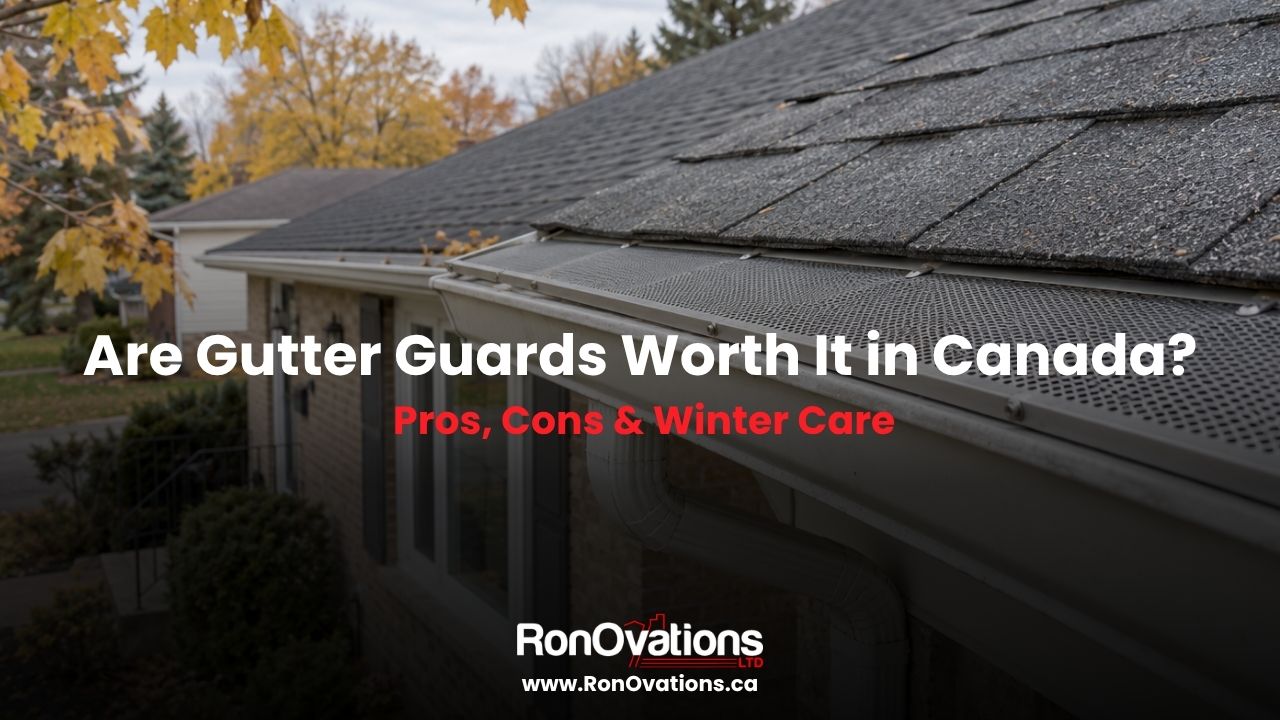
- Eavestrough-related water damage: Sometimes the roof covering is fine but clogged or damaged gutters are directing water where it shouldn’t go. Fixing the gutter system, or adding leaf guard, solves the problem without touching the shingles.
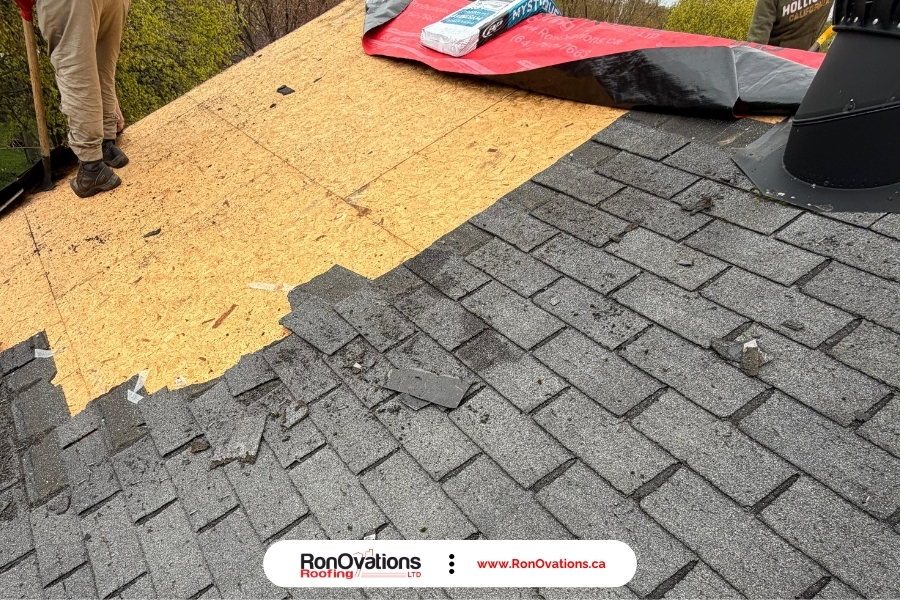
The key in every case: the underlying decking must be dry and solid. If you peel back shingles for a repair and find dark, spongy OSB, the scope just changed.
Metal Roofing: When Repair Is (and Isn’t) Enough
What kind of maintenance does a metal roof need in Ontario?
Metal roofs are tough, but they’re not maintenance-free. Common metal roof maintenance issues include loose fasteners from thermal expansion cycles, scratched coatings that invite surface rust, and sealant failure at penetrations and transitions. Most of these are straightforward, inexpensive repairs.
Annual maintenance should include a visual inspection from the ground and ladder, clearing debris from valleys and gutters, checking sealant at all penetrations, re-torquing any loosened fasteners, and verifying snow guards are secure before winter. With this basic upkeep, a quality metal roof installation can last 40-50 years or longer.
If your metal roof is under 15 years old and the issue is cosmetic, don’t let anyone talk you into a replacement. A repair and some manufacturer-matched touch-up paint is all you need. Replacement only makes sense when you’re dealing with widespread corrosion, structural denting from severe hail, or panels that have shifted off their fastener lines.
Does a New Roof Actually Improve Insulation?
Will replacing my roof lower my heating bills?
The shingles themselves aren’t insulation. But a full replacement is the single best opportunity to upgrade what’s underneath. When the old shingles and decking come off, your contractor can inspect and add attic insulation, install or upgrade the vapour barrier, and ensure soffit-to-ridge ventilation is working properly. So does a new roof help with insulation? Indirectly, yes, and the energy savings can be substantial.
Does a new roof improve insulation on an older Ontario home?
On homes built before the 1980s, we frequently find attic insulation at R-20 or below, well short of the R-50 to R-60 recommended under current OBC energy efficiency guidelines. A roof replacement gives you direct access to top up blown-in cellulose or batt insulation while the decking is exposed. Modern synthetic underlayment also provides a better secondary moisture barrier, keeping insulation dry and performing at its rated R-value. Reflective underlayment options can further reduce radiant heat gain in summer, cutting cooling costs by up to 10-15% on south-facing slopes. In our experience across hundreds of Ontario re-roofs, homeowners who combine a new roof with an insulation upgrade typically see heating bill reductions of 15-25% in the first winter.
Frequently Asked Questions
Can a roof be repaired instead of replaced if it has two layers of shingles?
No. The Ontario Building Code requires a full tear-off once two layers of asphalt shingles are present. You cannot add a third layer or perform an overlay repair. The only option is a complete replacement down to the decking.
How long does a roof repair last compared to a full replacement?
A well-executed repair on a roof with remaining useful life can last 5-10 years. A full replacement with quality materials like IKO Dynasty or CertainTeed Landmark shingles carries a manufacturer warranty of 30-50 years, with a realistic service life of 20-30 years in Ontario’s climate.
Is it worth repairing a 25-year-old asphalt roof?
Rarely. At 25 years, most asphalt shingles in Ontario have exceeded their effective lifespan. A repair may stop an active leak temporarily, but you’re likely facing cascading failures within 2-3 years. The average cost of roof replacement is significant, but it’s almost always the better long-term investment at this stage.
Does insurance cover roof repair or only replacement?
Most Ontario home insurance policies cover sudden and accidental damage, whether that means a repair or replacement depends on the extent of the damage. Wind, hail, and fallen trees are typically covered. Wear-and-tear deterioration is not. Document the damage with photos and file your claim promptly.
Whether a roof can be repaired instead of replaced comes down to three factors: the extent of the damage, the condition of the decking, and how much life the existing shingles have left. Localized problems on a roof under 15-18 years old are almost always worth repairing. Widespread issues on an aging roof, especially one already carrying two layers, point clearly toward replacement. Either way, an honest inspection of the decking tells the real story, and that inspection is where every good roofing decision starts.