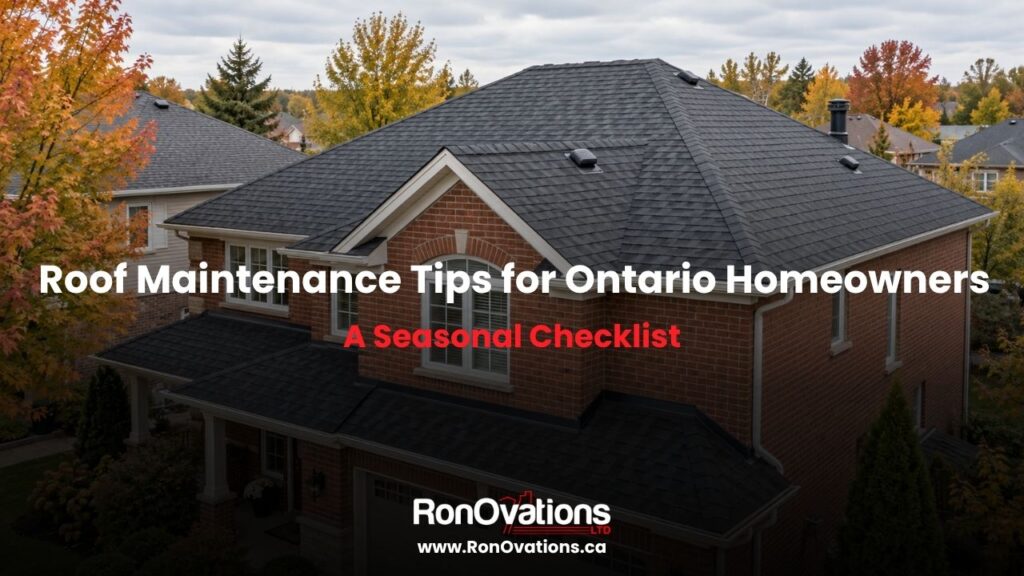
Quick answer: The most useful roof maintenance tips for Ontario homeowners are to check the roof in spring and fall, keep drainage clear, watch for changes after severe weather, and deal with leaks promptly. Start with observations from the ground. Arrange professional inspections and repairs based on your roof’s condition, manufacturer guidance and any warning signs.
A roof is easy to forget when it is doing its job. Then a gutter overflows, a shingle turns up on the lawn, or a mark appears on an upstairs ceiling. A simple maintenance routine gives you a better chance of noticing those changes before the next storm.
This guide focuses on sloped residential roofs, especially asphalt shingles. It covers what to look for, when to check it and what to ask a contractor. It is not a guide to walking on your roof or making repairs at height.
When should you check your roof in Ontario?
Use spring and fall as your regular checkpoints, then add a check after severe wind, hail, an ice storm or falling branches. IKO’s shingle maintenance guidance recommends professional maintenance twice a year and after major storms. Your roof’s age, condition and warranty requirements may call for a more specific schedule.
Time the fall check early enough to arrange any needed work before persistent freezing. In spring, wait until conditions allow a clear view of the roof. Ontario weather varies by location, so use local conditions rather than a fixed date.
| When | What to look for | What to do next |
|---|---|---|
| Spring | Missing or displaced shingles, damaged gutters, debris and new interior stains after winter. | Document changes and arrange an assessment where damage is visible. |
| Summer | Changes after storms, branches touching the roof and problems left unresolved in spring. | Arrange necessary repairs and professional tree care where needed. |
| Fall | Leaves in drainage paths, overflowing eavestroughs, loose roofline components and recurring attic concerns. | Arrange cleaning and repairs before sustained cold weather. |
| Winter | Recurring ice buildup, fresh leaks, falling ice or a visible change in the roofline. | Observe from a safe location and seek help promptly for concerning changes. |
| After severe weather | Roofing debris on the ground, branch impact, displaced materials or water entering the home. | Photograph what you can safely see and contact a roofer if damage is suspected. |
Do not wait for the next seasonal check if water is already coming inside. Maintenance appointments are for prevention; an active leak needs attention sooner.

Your Ontario roof maintenance checklist
1. Look for changes in the roof surface
From the yard or another safe ground-level viewpoint, look for missing shingles, lifted edges, uneven sections and debris sitting in roof valleys. Binoculars or a phone’s zoom can help you record visible changes, but they cannot confirm the condition of hidden layers.
Take photos from the same viewpoints each season. Comparing a new picture with an older one is more useful than trying to remember whether a patch looked different last spring. Do not lift shingles or walk onto the roof to investigate.
2. Check eavestroughs and downspouts
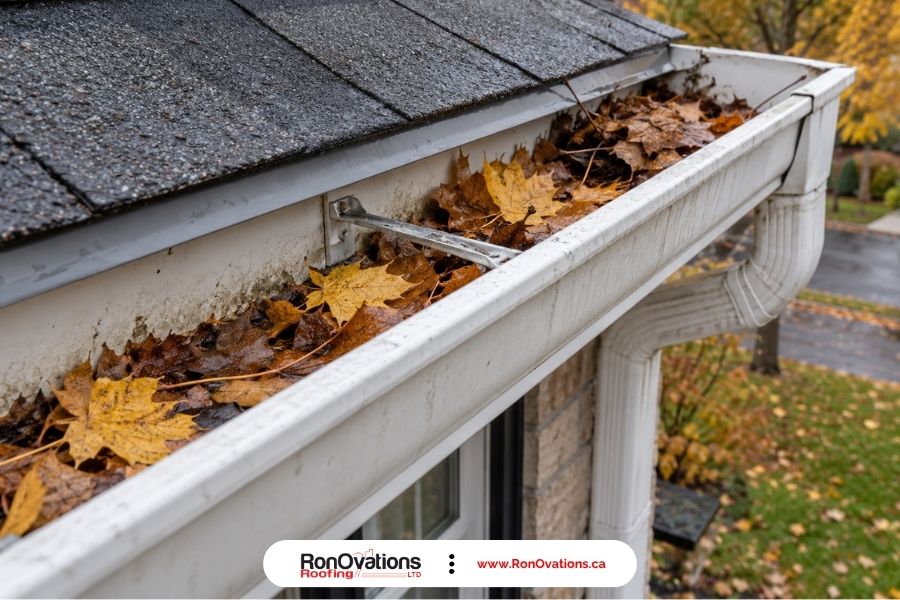
Watch for water spilling over the gutter edge, leaking at a joint or running down the wall. Look for sagging sections and disconnected downspouts. If it is safe to observe during ordinary rainfall, note where the water goes.
The Government of Canada recommends checking eavestroughs and downspouts at least twice a year, in spring and fall, and removing debris. Properties beneath mature trees may need additional attention. Gutter guards also need periodic checks.
Arrange professional cleaning when access requires a ladder or roof work you cannot safely perform. If drainage problems come with loose fascia or damaged soffit, have the surrounding roofline assessed too. Learn about our soffit and fascia repair services.
3. Ask for a close inspection of flashing and penetrations
Flashing directs water around roof intersections and features such as chimneys, walls and skylights. Pipe boots and other penetration details also need attention. These areas may be difficult to assess from the ground.
Ask the roofer to identify displaced metal, deteriorated seals and installation defects. Adding caulk everywhere is not a maintenance plan: the appropriate repair depends on how the detail is built and where water is entering.
4. Notice what is happening indoors
Check upper-floor ceilings and walls for new marks, peeling finishes or dampness. Note when the change appeared: after rain, during a thaw or during a cold spell. That timing can help a contractor investigate, although a stain alone does not identify the cause.
If attic access is safe, observe from the hatch without stepping onto insulation or unsupported ceiling surfaces. Report visible moisture, staining or a persistent musty smell. Leave inaccessible areas and any disturbance of insulation to a qualified professional.
5. Keep track of debris and overhanging branches
Branches touching the roof and repeated debris buildup deserve attention. Arrange professional tree work for branches that are large, difficult to reach or near power lines. Roof cleaning methods should suit the specific roofing material; ask what the manufacturer permits before agreeing to a treatment.
6. Keep a short maintenance record
Save inspection reports, photos, repair invoices and warranty documents together. For each concern, write down the date, location and weather conditions. Ask the contractor to distinguish work that needs attention now from items to monitor at the next visit.
A useful note might read: “September 25: water overflowed at the rear gutter corner during rain; photo saved; inspection requested.” That gives the next person a clear starting point.
What should you do before winter?
Start with unresolved leaks, damaged roofing and blocked drainage. Then bring up any recurring ice or attic moisture problems during your inspection. A clean gutter is useful, but it does not address every reason ice forms along a roof edge.
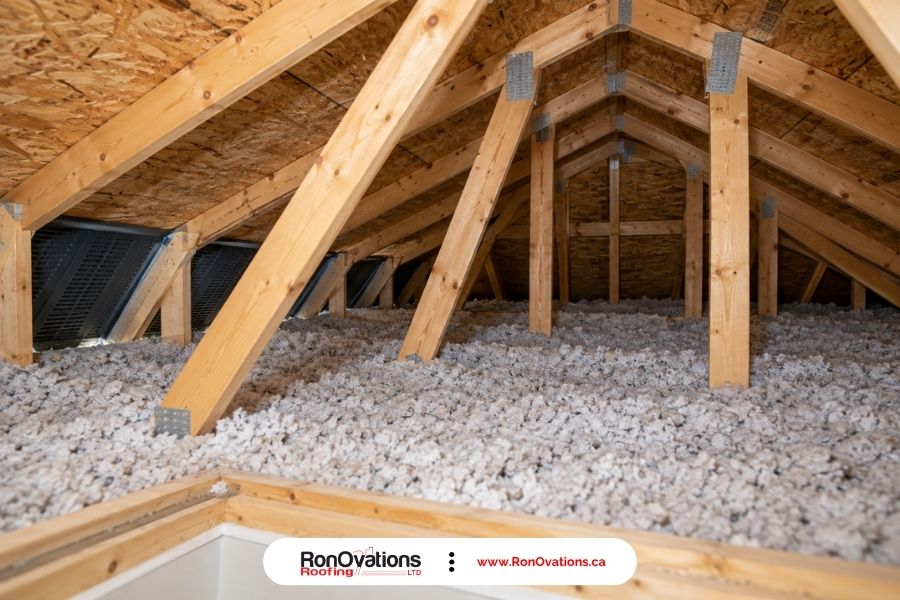
Ice dams can form when snow melts on a warmer roof surface and refreezes near colder eaves. Water may then back up beneath the roofing. Natural Resources Canada explains that air sealing, insulation and appropriate attic ventilation are important parts of addressing the problem. Adding more vents alone does not correct heat and moisture leaking from the house.
If the same roof edge develops ice repeatedly, ask for an assessment of the roof and attic together. Address moisture sources before adding insulation. Our attic insulation services are relevant when the assessment identifies an insulation issue.
For more detail on seasonal warning signs, see our guide to common winter roofing problems.
Should you remove snow from the roof?
Snow depth alone does not tell you whether a roof is overloaded. Snow weight, drifting, roof design and the building’s condition all matter. If you are concerned about accumulation, contact a qualified professional for advice specific to the property.
Do not climb onto a snowy roof or chip ice off the roofing. Roof rakes also bring risks from falling snow, overhead wires and damage to roof materials. Get advice on whether removal is needed and how it can be carried out safely.
Does the checklist change for metal or flat roofs?
The basic routine still applies: observe changes, keep drainage working and follow the roof system’s maintenance instructions. The details a contractor examines will differ.
| Roof type | Items for professional assessment | Detailed guide |
|---|---|---|
| Asphalt shingles | Shingle condition, flashing, penetrations and visible signs of deterioration. | Use the checklist in this article alongside your manufacturer’s instructions. |
| Metal roofing | Panel condition, transitions, coatings and fasteners where the system uses exposed fasteners. | Metal roof maintenance |
| Flat or low-slope roofing | Drainage outlets, membrane condition, seams and penetrations. | Flat roof maintenance |
Do not apply a cleaning method, sealant or repair technique simply because it worked on a different roof. Ask the contractor to match the work to the installed system.
Which problems need prompt attention?
The table below helps you decide what to report. It is a starting point for action, not a diagnosis of the roof’s condition.
| What you notice | Next step |
|---|---|
| Leaves or debris, with no visible leak or damage | Arrange cleaning and include the area in your maintenance check. |
| A missing shingle, loose flashing or repeated gutter overflow | Contact a roofer promptly and share photos taken from a safe location. |
| Fresh ceiling stains, dripping or dampness after rain or thawing | Request a leak assessment rather than waiting for the next seasonal visit. |
| A visibly sagging roofline, sudden structural movement or a bulging ceiling | Keep people away from the affected area and seek urgent professional help. If collapse appears imminent, leave the building and call emergency services. |
For visible damage or water entering the home, our roof repair services are the appropriate starting point. Do not assume the entry point is directly above an indoor stain.
What should a roof maintenance quote include?
Ask for a written scope rather than comparing prices alone. An inspection, gutter cleaning and roof repair are different tasks, even when they happen during the same visit.
Before booking, confirm which roof areas will be assessed, whether attic access is included, whether you will receive photos, and how any recommended repairs will be quoted. Also ask about access limitations and what happens if weather prevents a complete inspection.
Provide your location, roof material, approximate age and a description of the concern. Mention any recurring leaks and previous repairs. These details help the contractor understand what kind of visit you need.
Does a maintenance issue mean you need a new roof?
Not necessarily. Some localised problems can be repaired, while widespread deterioration may need a broader plan. Ask the roofer to explain what they found and why the proposed work fits the condition of the roof. Our guide to repairing a roof instead of replacing it explores that decision separately.
Frequently asked questions
Can I check my roof without climbing onto it?
Yes. Ground-level observations can reveal missing materials, debris, overflowing gutters and other visible changes. They are useful between professional visits, but they cannot confirm the condition of every flashing detail or the layers beneath the roof covering.
Do I need to wait until all the leaves have fallen?
No. Deal with existing clogs or overflow when you notice them. If nearby trees continue shedding leaves, arrange a follow-up check. Waiting for a single end-of-season cleaning may leave an existing drainage problem unresolved.
Is a roof inspection the same as gutter cleaning?
No. Gutter cleaning removes debris from the drainage system. A roof inspection evaluates the condition of the areas included in the inspection scope. Confirm what is included rather than assuming one service covers the other.
Should I still arrange maintenance if the roof is not leaking?
Yes. The absence of an indoor leak does not confirm that every roof component is in good condition. Keep your seasonal routine and follow the inspection guidance for your roofing system.
What information should I send when booking a visit?
Send your address, roof material if known, approximate roof age and a short description of the problem. Include safely taken photos and explain when it happens, such as during wind-driven rain or snowmelt. Tell the contractor immediately if water is actively entering the home.
Plan your next roof maintenance check
Start with one walk around the property and a short list of anything that has changed. You do not need to diagnose the problem yourself; clear photos and a description of what happened give a roofing professional a useful place to start.
RonOvations provides roof maintenance services for homeowners in Ontario. If your roof is due for a check or you have noticed a concern, contact our team to discuss your property and request a quote.