Why Most Eco-Friendly Roofing Lists Get It Wrong for Canada
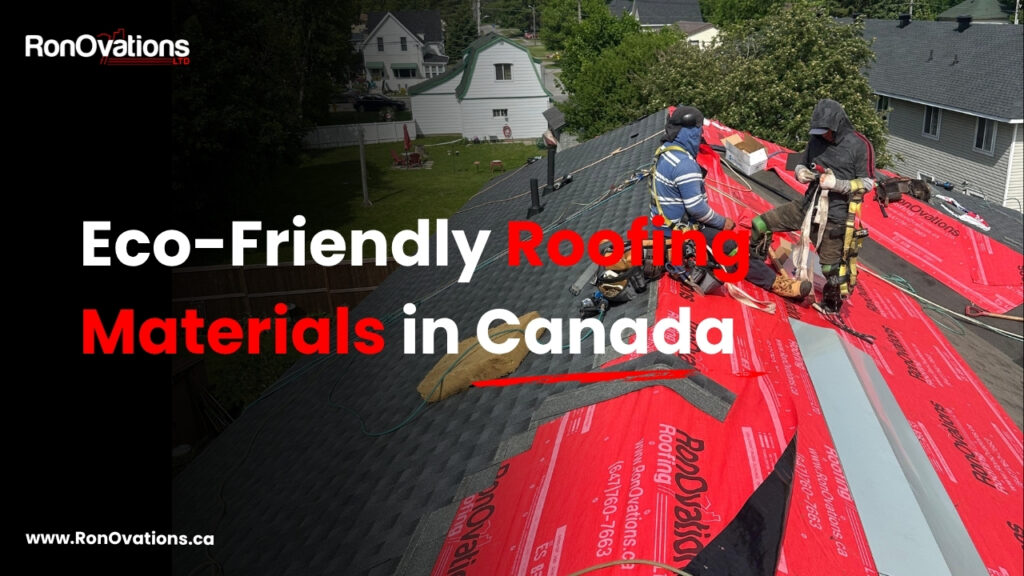
Most eco-friendly roofing materials marketed in Canada don’t survive five harsh winters, let alone twenty. We’ve been installing and replacing roofs since 2012, and the gap between marketing claims and job-site reality is wider than you’d think. A shingle can be made from recycled content and still crack apart after three Ontario freeze-thaw seasons. That’s not green. That’s landfill with extra steps.
The problem is that most “best roofing materials” lists are written by people who’ve never pulled a nail gun on a February morning. In our experience across southern Ontario and the GTA, the best roofing materials are the ones that balance durability, energy performance, and real-world recyclability. Below, we break down every major category with pricing, lifespan data, and lessons from our own installs.
How We Evaluate the Best Roofing Materials for Canadian Climates
We judge every product against three criteria: how it handles freeze-thaw cycling (Ontario alone sees 30–50 cycles per winter), how much it reduces heating and cooling loads, and whether it can actually be recycled at end of life. We also factor in compliance with the Ontario Building Code (OBC Section 9.26) for roof covering requirements and the National Building Code of Canada (NBC) for minimum insulation values. A product that checks the “eco” box but fails OBC wind-uplift requirements isn’t making our list.
Over the past 12 years, we’ve tracked warranty claims, callback rates, and energy-bill changes across more than 1,400 residential projects. That hands-on dataset shapes every recommendation here.
Asphalt Shingles: Still the Baseline for Most Canadian Roofs
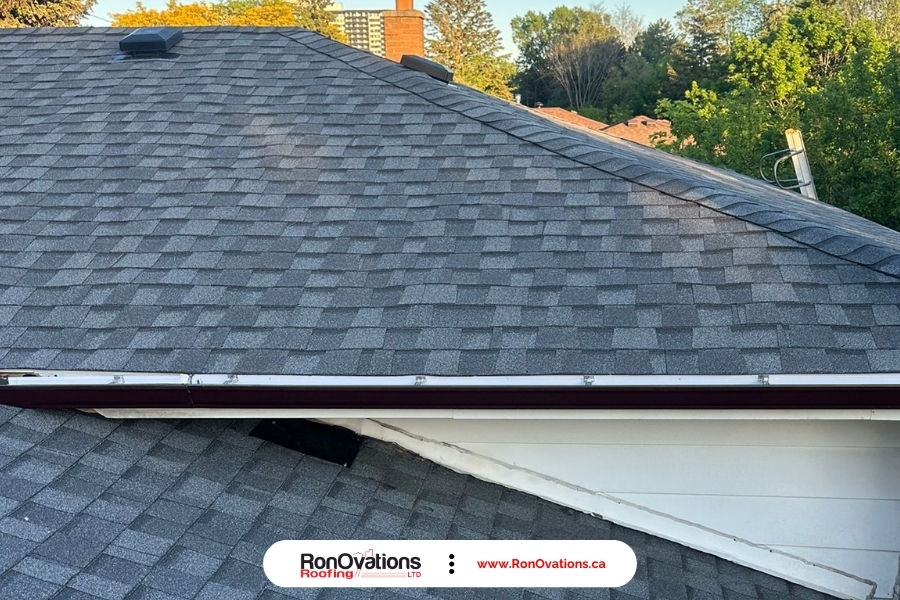
Asphalt shingles remain the most common roofing material in Canada, and for good reason: they’re affordable, widely available, and familiar to every crew. But not all shingles are created equal when it comes to sustainability or performance.
Which asphalt shingles perform best in freeze-thaw conditions?
From our installs, GAF Timberline HDZ and Owens Corning Duration consistently outperform in freeze-thaw durability. Both use SBS-modified bitumen, which stays flexible in sub-zero temperatures. We’ve also had strong results with IKO Dynasty, which carries ArmourZone reinforcement in the nailing area, reducing blow-offs during winter storms. BP Mystique is another solid performer we install regularly in the Ottawa Valley, and CertainTeed Landmark rounds out the top tier for homeowners who want a balance of aesthetics and cold-weather resilience.
The average cost of roof replacement with architectural asphalt shingles in Ontario runs $5.00 to $7.50 per square foot installed (CAD), depending on roof complexity and whether you’re stripping one layer or two. For a typical 1,500 sq ft bungalow roof, that’s roughly $7,500 to $11,250 all in.
Are recycled-content shingles worth it?
Some manufacturers now incorporate post-consumer recycled materials into their shingle lines. In theory, that’s great. In practice, we’ve seen a few budget recycled-content products delaminate within 5–7 years. Stick with name-brand options like IKO Cambridge or GAF Timberline HDZ, which incorporate recycled content without sacrificing the polymer-modified core that keeps them intact through Canadian winters.
Metal Roofing: The Long-Term Sustainability Champion
If you’re asking how much is a metal roof, the answer in 2026 is $9.00 to $14.00 per square foot installed (CAD) for standing-seam steel or aluminum in Ontario. That’s roughly double the cost of asphalt, but the lifespan is 40–60+ years versus 20–30 for shingles. Over a 60-year ownership period, metal often costs less per year.
Do metal roofs prevent ice dams?
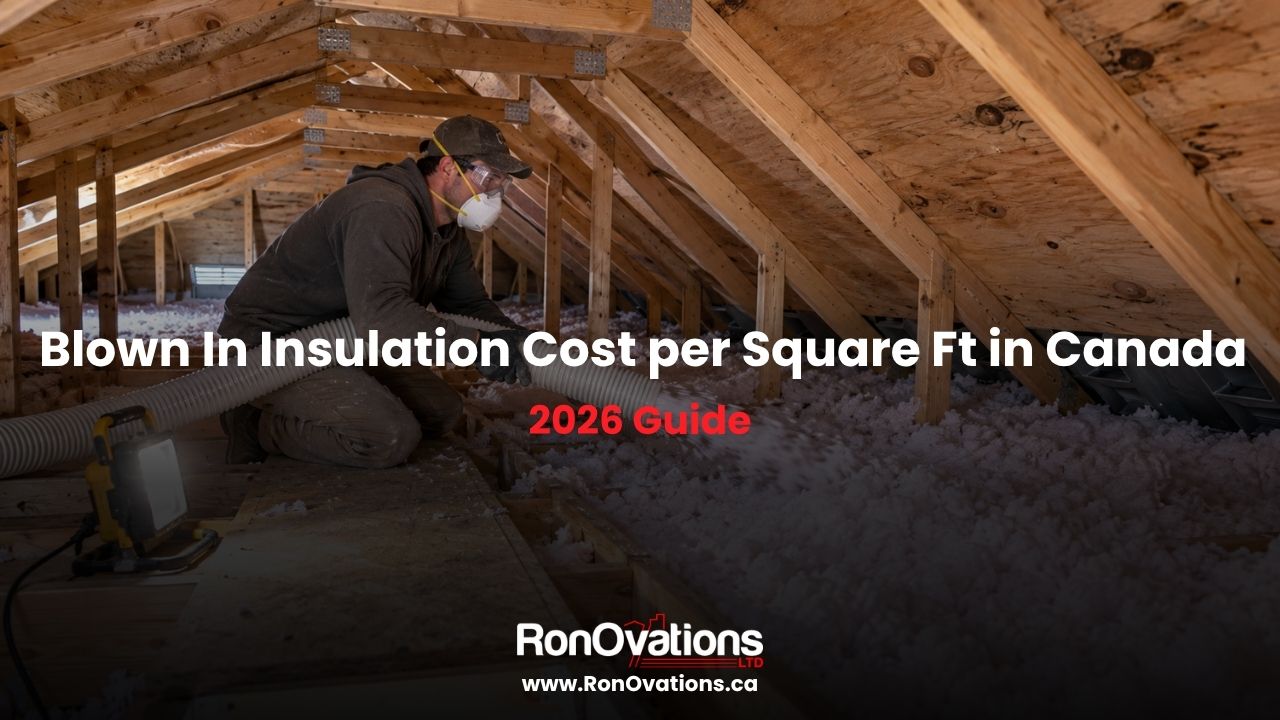
Yes, metal roofs significantly reduce ice dam formation. The smooth surface sheds snow before it can melt, refreeze, and back up under the roofing. We’ve installed hundreds of metal roofs in Muskoka and Barrie, and callbacks for ice-dam damage on metal are nearly zero compared to asphalt. That said, metal roofing alone isn’t a complete solution. You still need proper attic ventilation and insulation per OBC 9.19.1 to prevent warm air from reaching the roof deck. If you’re searching for blown in attic insulation near me, pairing cellulose or fibreglass blow-in with a metal roof is the gold standard for ice-dam prevention.
What does metal roof maintenance actually involve?
Metal roof maintenance is minimal compared to other materials. We recommend an annual visual inspection, clearing debris from valleys and gutters, and checking fastener tightness on exposed-fastener systems every 5–7 years. Standing-seam panels with concealed clips need even less attention. In 12 years of installs, the most common metal roof maintenance issue we see is galvanic corrosion where dissimilar metals meet, which is entirely preventable with proper flashing details at install time. Recoating a factory-painted steel roof typically isn’t needed for 30–40 years.
Stone-Coated Steel: The Best of Both Worlds
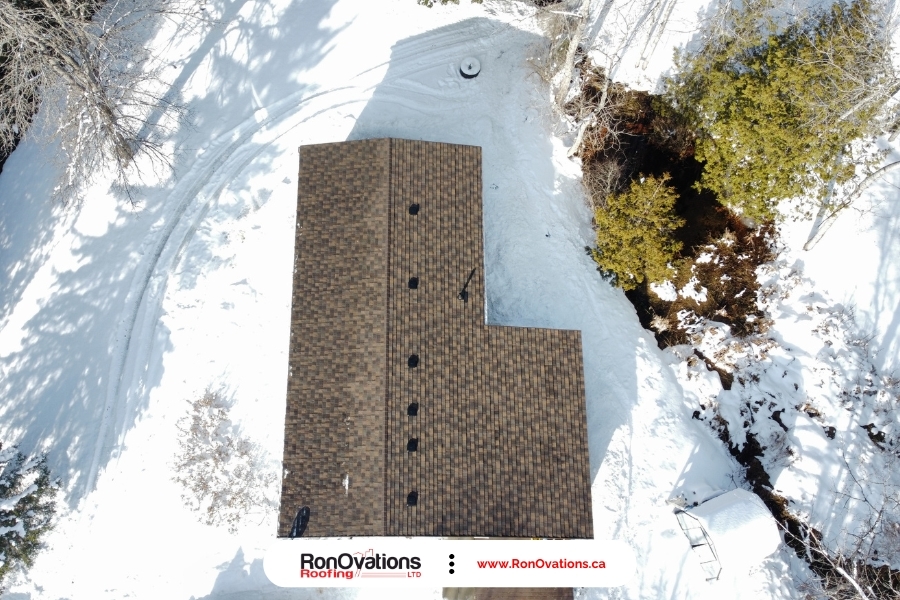
Decra stone-coated steel panels deserve their own section because they solve the two biggest objections homeowners raise about metal: aesthetics and noise. Decra tiles look like traditional shingles or Mediterranean tile but carry a 50-year limited warranty and are 100% recyclable at end of life. We’ve installed Decra on heritage homes in Niagara-on-the-Lake where HOA guidelines prohibited the look of standing-seam metal, and the results have been excellent through multiple winters.
Installed cost for Decra in Ontario runs $10.00 to $13.50 per square foot (CAD), which slots between premium asphalt and standing-seam steel. For a 2-storey home with a 2,000 sq ft roof area, budget $20,000 to $27,000.
Flat Roof Materials: TPO, EPDM, and Green Roof Options
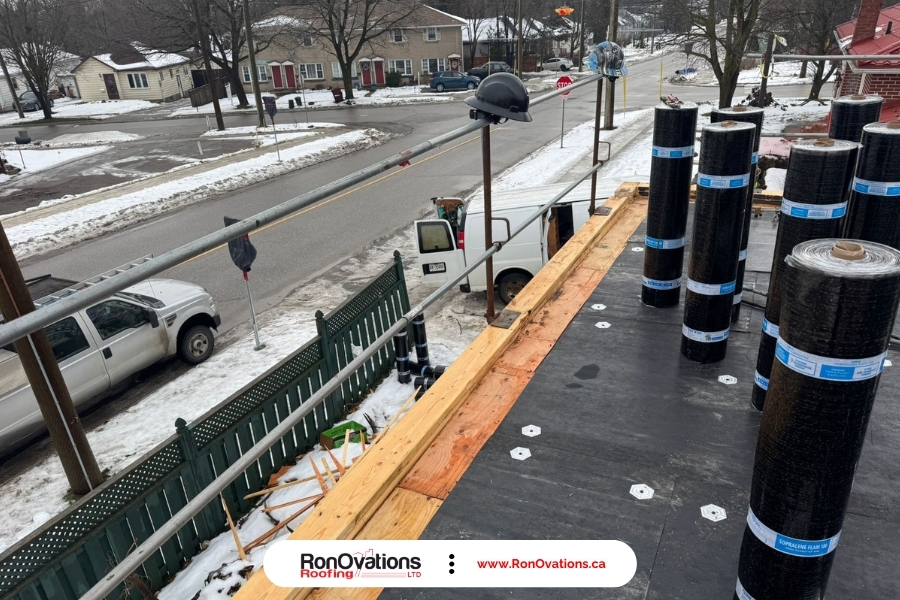
Flat and low-slope roofs are common on urban homes, additions, and commercial buildings across Canada. The two dominant single-ply membranes are Mule-Hide TPO and Carlisle EPDM.
Is TPO or EPDM better for Canadian flat roofs?
TPO (thermoplastic polyolefin) reflects more solar heat and welds at the seams, creating a monolithic waterproof surface. We prefer Mule-Hide TPO for flat residential roofs where summer cooling loads matter. EPDM (ethylene propylene diene monomer), particularly Carlisle’s 60-mil membrane, is more flexible in extreme cold and has a longer track record in northern climates. For roofs above heated living space in Zone 6 (most of southern Ontario per NBC climate zone maps), we lean TPO for energy savings. For unheated garages or outbuildings, Carlisle EPDM’s cold-weather flexibility wins.
Does a New Roof Help with Insulation?
A new roof alone doesn’t add insulation, but a roof replacement is the single best time to upgrade it. When we strip an old roof, we can inspect the deck, seal air leaks at penetrations, and add rigid foam board above the sheathing before the new covering goes on. This “exterior insulation” approach is endorsed by the NBC and avoids the moisture-trapping problems that can occur with interior-only retrofits.
For most Ontario homes, the OBC requires a minimum of R-50 in the attic (OBC 12.2.1.1). Many older homes we work on have R-20 or less. Upgrading to R-60 during a reroof typically adds $1.50 to $3.00 per square foot to the project cost but can cut heating bills by 15–25%, based on energy audits we’ve reviewed from past clients. If you’re considering blown in attic insulation near me as a standalone project, expect $1,800 to $3,500 for a typical bungalow attic in the GTA.
Comparison Table: Best Roofing Materials for Canadian Homes (2026)
| Material | Installed Cost (CAD/sq ft) | Lifespan (Years) | Recyclable? | Ice-Dam Resistance | Best For |
|---|---|---|---|---|---|
| Asphalt (e.g., GAF Timberline HDZ) | $5.00–$7.50 | 20–30 | Partial | Moderate | Budget-conscious homeowners |
| Standing-Seam Metal | $9.00–$14.00 | 40–60+ | Yes (100%) | High | Long-term ownership, rural properties |
| Decra Stone-Coated Steel | $10.00–$13.50 | 50+ | Yes (100%) | High | Heritage/HOA-restricted homes |
| TPO (Mule-Hide) | $6.50–$9.00 | 20–30 | Limited | N/A (flat roof) | Flat roofs, urban homes |
| EPDM (Carlisle) | $5.50–$8.50 | 25–35 | Limited | N/A (flat roof) | Cold-climate flat roofs, outbuildings |
What About Cedar, Slate, and Clay Tile?
We get asked about natural materials regularly. Cedar shake can last 30+ years with diligent maintenance, but it’s a fire risk unless treated (and many Ontario municipalities now restrict untreated cedar under local fire codes). Natural slate is gorgeous and can last a century, but at $20.00–$35.00 per square foot installed, it’s out of reach for most residential budgets. Clay tile is rare in Canada outside of a few Mediterranean-style custom builds. None of these are among the best roofing materials for the average Canadian homeowner in 2026, though slate remains unmatched for heritage restoration projects.
Frequently Asked Questions
How long do the best roofing materials last in Canada?
Asphalt shingles last 20–30 years, metal roofs 40–60+ years, and stone-coated steel 50+ years in Canadian climates. Lifespan depends heavily on proper ventilation and installation quality. We’ve seen premium shingles fail in under 10 years on poorly ventilated roofs.
What is the most energy-efficient roofing material?
Metal roofing with a reflective coating (such as Kynar/PVDF finish) offers the best combination of reflectivity and durability. Paired with R-50+ attic insulation, a metal roof can reduce combined heating and cooling costs by 20–30% compared to a dark asphalt roof over an under-insulated attic.
Can I install solar panels on any roofing material?
Standing-seam metal is the easiest to pair with solar because panels clamp directly to the seams with no roof penetrations. Asphalt shingles work fine with racked solar mounts, but you’ll need to ensure the shingles have enough remaining lifespan to match the 25-year solar panel warranty. We always recommend completing the reroof before the solar install.
Are metal roofs noisy during rain or hail?
Not with proper installation. A metal roof installed over solid sheathing and underlayment, with attic insulation below, is no louder than asphalt during rain. We’ve measured sound levels on completed installs and the difference is negligible. Hail on metal can be slightly louder, but the panels themselves resist hail damage far better than shingles.
Choosing the Right Roof for Your Climate Zone
Canada’s climate zones range from Zone 4 (southern BC coast) to Zone 8 (northern territories). The best roofing materials for a Vancouver townhouse aren’t the same as for a Sudbury bungalow. In Zones 5 and 6 (where most Canadians live), the sweet spot is a durable, reflective roof paired with R-50 to R-60 attic insulation. Metal and stone-coated steel handle the freeze-thaw cycling and snow loads of these zones better than any other category, which is why they dominate our recommendations. For flat roofs in any zone, TPO or EPDM membranes installed to NBC standards remain the most reliable choices.