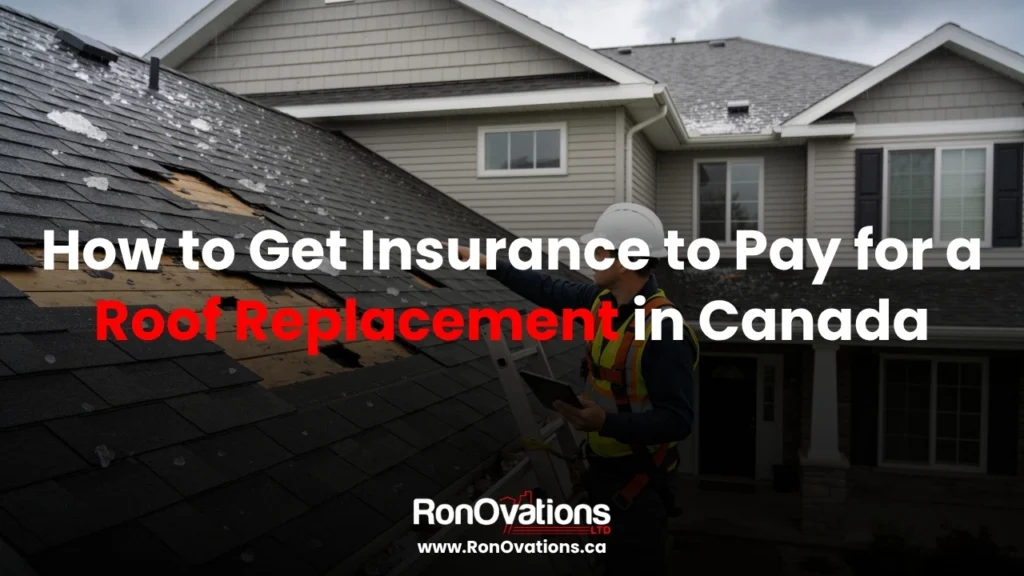
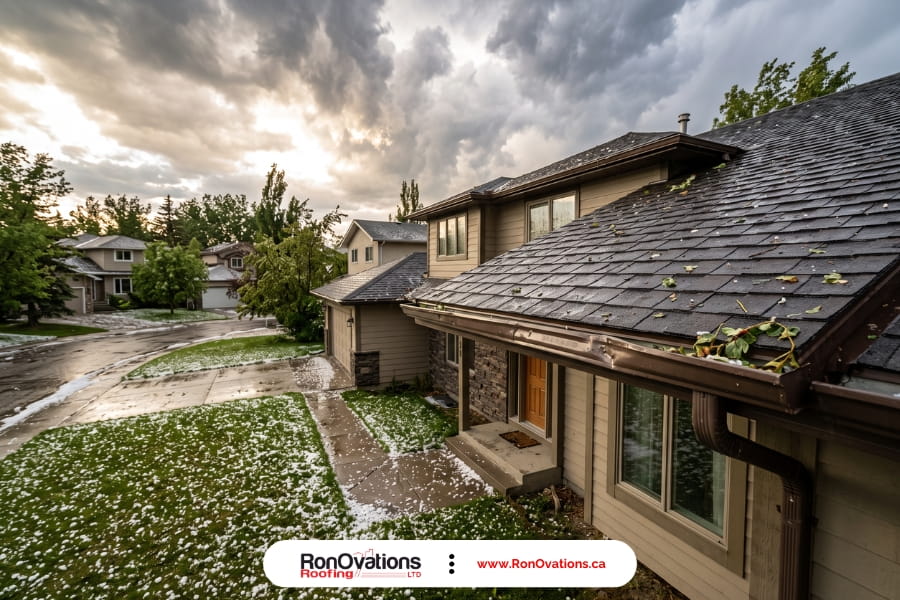
A storm rolls through overnight, and by morning you spot missing shingles, a dented eavestrough, or a fresh water stain spreading across the ceiling. Then comes the sinking feeling: a new roof can run well into five figures. The good news is that if the damage came from a covered event, your home insurance may pay for most, sometimes all, of it. The hard part is knowing how to get insurance to pay for roof replacement without quietly leaving thousands of dollars on the table.
After years of standing on Canadian rooftops next to insurance adjusters, in the Greater Toronto Area, across Alberta’s hail country, and through Manitoba’s brutal freeze-thaw winters, our crews have seen exactly where claims go right and where homeowners get underpaid. This guide walks you through the whole process, step by step, so you can protect your home and your wallet.
Key takeaways
- Your payout depends on one thing above all: whether your policy is Actual Cash Value (ACV) or Replacement Cost Value (RCV).
- Insurance covers sudden, accidental damage (wind, hail, fire, fallen trees), never normal wear, age, or poor maintenance.
- Documentation and a detailed contractor estimate are your strongest tools for a full payout.
- A lower-than-expected first cheque is often recoverable depreciation being held back, not a denial.
- A denied or underpaid claim can usually be appealed with the right evidence.
In this guide
- Does your policy even pay for a full roof?
- How to get insurance to pay for your roof replacement: 7 steps
- Recoverable depreciation, explained
- Why insurance only paid for part of your roof
- What to do if your roof insurance claim is denied
- Hail damage claims in Alberta: a special case
- Roof insurance across Ontario, Alberta & Manitoba
- How RonOvations helps with your claim
- Frequently asked questions
First, figure out if your policy even pays for a full roof
Before anything else, everything hinges on two little acronyms buried in your policy. They decide whether your insurer hands you enough for a brand-new roof or just a fraction of it.
- Replacement Cost Value (RCV): pays the full cost to replace your roof with new materials of similar quality, minus your deductible. This is the coverage you want.
- Actual Cash Value (ACV): pays the depreciated value of your old roof. A 15-year-old roof can be discounted by more than half, leaving you to fund the rest out of pocket.
| Scenario (roof costs $18,000) | ACV policy | RCV policy |
|---|---|---|
| Depreciation applied (older roof) | $9,000 deducted | Held back, then recoverable |
| Deductible | $1,000 deducted | $1,000 deducted |
| Your out-of-pocket cost | ~$10,000 | ~$1,000 (just the deductible) |
How to check yours in two minutes: pull up your policy’s declarations page and look for the “loss settlement” basis. It will say either RCV or ACV. If you have ACV and a relatively young roof, ask your broker about switching to RCV, or adding a depreciation waiver, at your next renewal. For the bigger picture on coverage, see our guide on whether home insurance covers roof replacement in Canada.
How to get insurance to pay for your roof replacement: 7 steps
Here’s the exact sequence we walk homeowners through. Follow it in order, because skipping a step is the most common reason a valid claim gets underpaid or denied.
1. Document the damage immediately
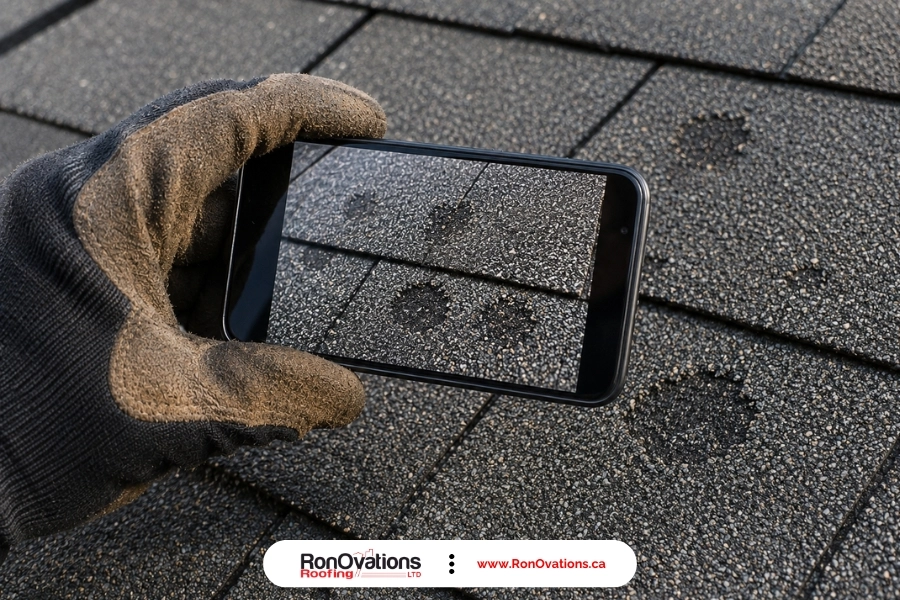
Take dated photos and video the moment it’s safe to do so, from the ground first, and up close only if you can do it safely. Capture missing or cracked shingles, hail bruising, dented vents and flashing, and any interior water stains. If you already have “before” photos from a previous spring, even better: they prove the damage is new, not pre-existing.
2. Read your policy before you call
Confirm your ACV/RCV status, your standard deductible, and, this one trips people up, whether you have a separate wind and hail deductible, which is common on the Prairies. Knowing your numbers before you file keeps expectations realistic and the conversation on your terms.
3. Get an independent roofer’s inspection and detailed estimate
This is your leverage. A qualified roofing contractor documents the true scope of damage and produces a line-by-line estimate the adjuster can’t easily dismiss. Our teams provide free, insurance-ready inspections and use a full roof inspection checklist so nothing gets missed, not the decking, underlayment, flashing, or code upgrades.

4. File promptly and meet the reporting deadline
Most Canadian policies require you to report damage within a set window, often 30 to 60 days. Report the loss, get a claim number, and take reasonable steps to prevent further damage (an emergency tarp counts). Delaying is one of the easiest ways to hand your insurer a reason to deny.
5. Meet the adjuster, with your contractor present
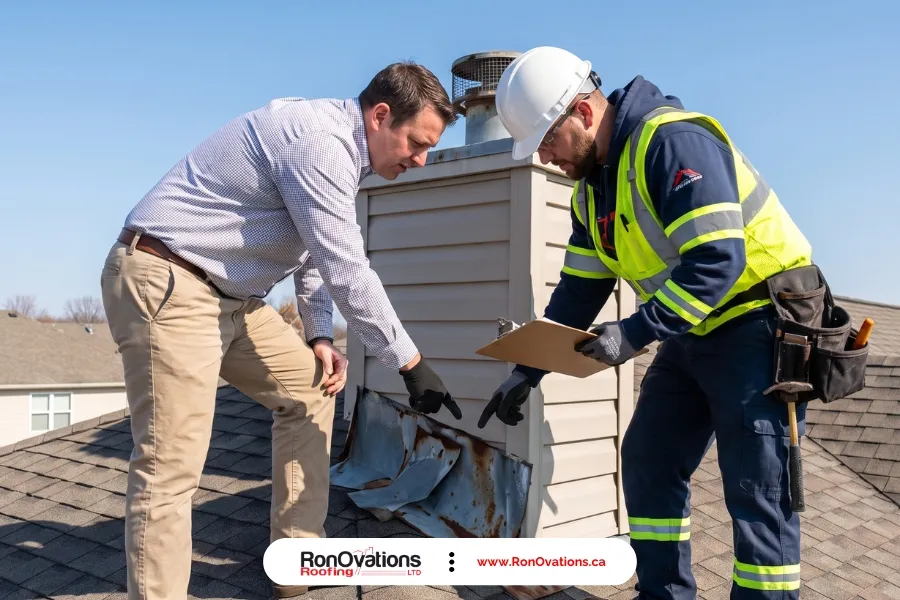
The adjuster works for the insurance company; your roofer works for you. Having both on-site means every area of damage gets pointed out and agreed on in person, instead of being quietly left off the estimate. Bring your photos and your contractor’s estimate to the meeting.
6. Compare the adjuster’s estimate line-by-line, and supplement
When the insurer’s estimate arrives, put it side-by-side with your contractor’s. Watch for omitted areas, low material quantities, conservative labour rates, and missing code-upgrade or permit costs. As the policyholder, you have the right to supplement the claim, submitting the difference with supporting documentation for approval. This back-and-forth is normal, and it’s often where the real money is recovered.
7. Complete the work and recover your depreciation
On an RCV policy, your insurer typically pays in two cheques: the first covers the depreciated value up front, and the second releases the held-back depreciation after the roof is finished and documented. Complete the replacement, have your roofer submit the final invoice and photos, and claim that second cheque. More on exactly how this works next.
Recoverable depreciation on a roof, explained
If your first insurance cheque looked shockingly low, don’t panic, it’s usually not a denial. With an RCV policy, your insurer withholds the recoverable depreciation on your roof until the work is actually done. Here’s the two-cheque system in plain English:
- Cheque one (ACV): the depreciated value of your roof, minus your deductible, paid soon after the claim is approved.
- Cheque two (recoverable depreciation): the remaining balance, released once you finish the replacement and submit proof, bringing your total up to the full RCV.
The catch: recoverable depreciation is only released if you complete the work and provide documentation. Keep the initial cheque without replacing the roof and you forfeit it, and in Canada, misusing claim funds can create bigger problems down the road. If your policy carries non-recoverable depreciation instead, that portion is never reimbursed, which is exactly why an RCV policy or a depreciation waiver matters so much.
Why insurance only paid for part of your roof
“Why did insurance only pay part of my roof?” is one of the most common questions we hear. Beyond the ACV depreciation gap, a partial payout usually comes down to one of these:
- Narrow scope: the adjuster’s estimate leaves out decking, flashing, permits, or code upgrades your contractor included.
- Low unit pricing: conservative labour or material rates that don’t reflect real Canadian costs.
- Matching disputes: if your shingles are discontinued and can’t be matched, that can justify a larger, sometimes full, replacement. Don’t accept a patch that leaves a mismatched roof.
- Pre-existing condition adjustments: the insurer reduces payment citing prior wear. Solid documentation is your defence.
Each of these is negotiable. A detailed, well-documented supplement from an experienced contractor is what turns a partial payout into a fair one.
What to do if your roof insurance claim is denied
A roof insurance claim denied notice isn’t always the end of the road. First, understand why it happened. The most common reasons in Canada are:
- Damage attributed to age, wear and tear, or lack of maintenance rather than a sudden event
- Pre-existing damage the insurer says was there before the storm
- Late reporting or failure to prevent further damage
- A roof past the age limit some policies set for coverage
To appeal: request the denial reason in writing, get an independent roofer’s assessment that directly addresses it, and submit your dated documentation through your insurer’s formal appeals process. For significant claims, a licensed public adjuster, who works for you, not the insurer, can negotiate on your behalf, typically for a percentage of the settlement. And if you believe a legitimate claim is being unreasonably denied or delayed, you can escalate to your provincial regulator or the Insurance Bureau of Canada for guidance.
Hail damage claims in Alberta: a special case
Alberta sits squarely in Canada’s “Hailstorm Alley,” and Calgary regularly sees some of the country’s costliest hail events. If you’re filing a hail damage roof insurance claim in Alberta, a few things matter more here than anywhere else:
- Check for a separate hail/wind deductible, it’s often higher than your standard one.
- Hail bruising can be subtle. An experienced roofer will find soft spots and mat fractures an untrained eye misses.
- Beware storm chasers who flood the province after a big event. A local, licensed contractor with a real address and reviews is always the safer choice.
When it’s time to rebuild, consider impact-resistant roofing materials, many Alberta insurers offer premium discounts for Class 4 shingles, and they hold up far better to the next storm.
Roof insurance across Ontario, Alberta & Manitoba
The core rules are consistent nationwide. Sudden, accidental damage is covered, while wear and age are not. What differs by region is the kind of storm that triggers a claim:
- Ontario: summer windstorms and winter ice damming are the usual culprits. Ontario homeowners can confirm their rights with the Financial Services Regulatory Authority of Ontario.
- Alberta: hail is king, with wind close behind. Separate hail deductibles are common.
- Manitoba: extreme freeze-thaw cycles and heavy snow load drive ice-dam and wind claims through the winter.
Timing your replacement well also protects future claims, so see our guide to the best time of year to replace a roof, and make sure you understand your new roofing warranty before the crew leaves.
How RonOvations helps with your roof insurance claim
Insurance work rewards experience, and it’s what we do every week. Across Ontario, Alberta, and Manitoba, our licensed crews help homeowners:
- Perform free, insurance-ready roof inspections with full photo documentation
- Produce detailed, line-by-line estimates adjusters take seriously
- Meet the adjuster on-site and support the supplement process
- Complete shingle, metal, and flat roof replacements, plus eavestrough, soffit, and fascia, to the approved scope
We won’t offer to waive your deductible (that’s insurance fraud in Canada, and a red flag from any contractor). What we will do is make sure your damage is fully documented and fairly valued. Book your free roof inspection and we’ll help you start your claim the right way.
Frequently asked questions
Will insurance pay for a full roof replacement in Canada?
Yes, if the damage is from a covered peril like wind, hail, fire, or a fallen tree, and you have Replacement Cost Value (RCV) coverage. With an ACV policy, insurance pays the depreciated value and you cover the rest.
Why did my insurance only pay for part of my roof?
Usually depreciation being held back on an RCV policy (recoverable after the work is done), or a narrow adjuster estimate that missed items your contractor included. Both are negotiable through a documented supplement.
How do I get my recoverable depreciation released?
Complete the roof replacement, then have your roofer submit the final invoice and completion photos to your insurer. Once they confirm the work matches the approved scope, they release the second cheque.
What should I do if my roof insurance claim is denied?
Get the denial reason in writing, obtain an independent roofer’s assessment that addresses it directly, and file a formal appeal with your documentation. A public adjuster can help with larger claims.
How many years before insurance won’t cover my roof?
It varies by insurer, but many policies reduce coverage or switch to ACV once a roof passes 15 years, and some won’t insure very old roofs at all. Check your renewal terms each year.
Is it fraud if a roofer offers to waive my deductible?
Yes. Waiving or “eating” your deductible is considered insurance fraud in Canada. A reputable contractor will never promise a “free roof with no deductible.”
Written by the RonOvations roofing team. We’re a licensed roofing and exterior renovation company serving homeowners across Ontario, Alberta, and Manitoba, with hands-on experience guiding insurance claims from inspection through final payment. This guide is general information, not financial or legal advice. Coverage varies by policy and province, so always confirm the details with your own insurer or a licensed broker.