
The Real Reason Your Roofing Warranty Claim Was Denied
A roofing warranty claim denied by the manufacturer almost always traces back to installation or maintenance failures, not defective shingles. In Ontario, denied claims leave homeowners facing $8,000 to $35,000 in out-of-pocket replacement costs depending on material and home size. We’ve been tearing off roofs across Ontario since 2012, and the pattern is consistent: homeowners assume their 50-year warranty means 50 years of worry-free coverage. It doesn’t. Manufacturers like GAF, IKO, Owens Corning, and CertainTeed write warranties to cover manufacturing defects only. The fine print gives them wide latitude to deny claims for workmanship issues, ventilation failures, or accessory mismatches.
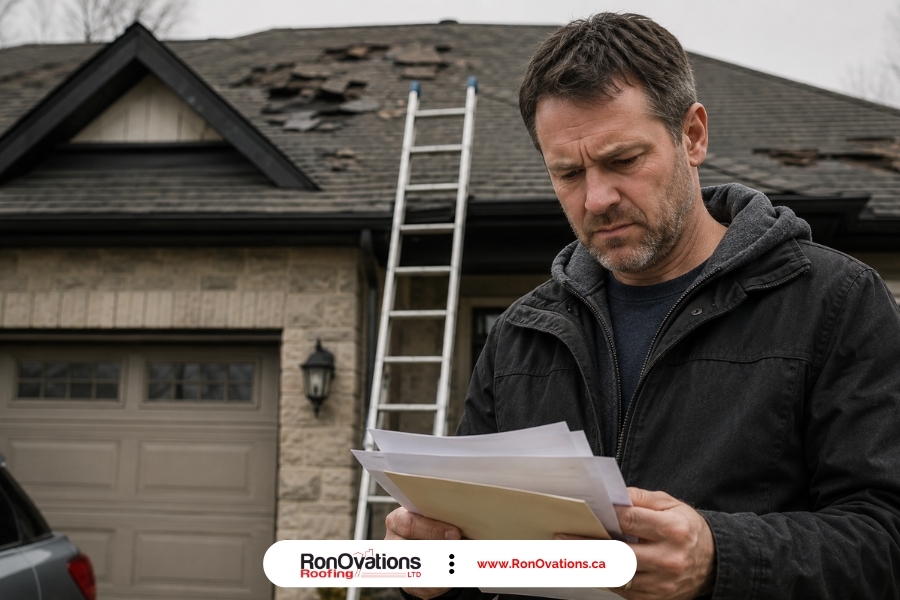
Here’s what most people don’t realize: the manufacturer warranty and the workmanship warranty are two completely separate documents from two completely separate companies. The manufacturer covers material defects like premature granule loss or cracking. Your contractor’s workmanship warranty covers installation labour. When a leak appears, the manufacturer’s adjuster looks for any installation deviation to shift liability back to the installer. If your installer cut corners or went out of business, you’re stuck in a gap between two warranties that neither party wants to honour. If you’re dealing with an active leak right now, see our guide to emergency roof repair services.
After inspecting hundreds of tear-offs, we’ve identified five specific mistakes that silently void shingle warranties. Most homeowners never learn about these until a claim is already denied. Understanding your flat roof system options is equally important if you have a low-slope section.
Manufacturer Warranty vs. Workmanship Warranty
What is the difference between prorated and non-prorated roof warranty?
A non-prorated warranty covers the full replacement cost, including materials and sometimes labour, for a defined period. GAF’s Timberline HDZ, for example, carries a non-prorated period of roughly 10 years under the Golden Pledge warranty. After that, the warranty becomes prorated, meaning the manufacturer’s payout shrinks each year based on the shingle’s age. A “lifetime” or 50-year warranty that’s prorated after year 10 might reimburse you only 30-40% of material cost by year 20. That’s a fraction of the average cost of roof replacement in Ontario, which runs $8,000 to $18,000 for asphalt shingles alone. Our Vaughan roofing team walks every client through the proration schedule before work begins.
Owens Corning’s Preferred Protection warranty works similarly: non-prorated coverage for a set window, then declining reimbursement. IKO’s limited warranty on Cambridge shingles prorates from the start on some product lines, which means even a year-five claim could leave you covering a significant portion of the bill. The takeaway is simple: read the proration schedule before you sign the contract, not after a leak shows up.
Can I transfer my roofing warranty when I sell my home?
Most manufacturers allow one transfer to a subsequent homeowner, but the window is tight. GAF and Owens Corning both require written notification within 60 days of the property sale. IKO requires written notice as well, and BP has additional restrictions that vary by product line. CertainTeed allows transfers but may reduce the warranty term for the second owner. Missing the transfer deadline doesn’t just reduce your coverage. It can void the warranty entirely. If you’re selling your home, include the warranty registration number and transfer instructions in your closing documents. It’s one of the easiest ways to add value to the sale. Roofing work in Innisfil.
Mistake 1: Wrong Nailing Pattern and Placement
What voids a roofing shingle warranty in Canada?
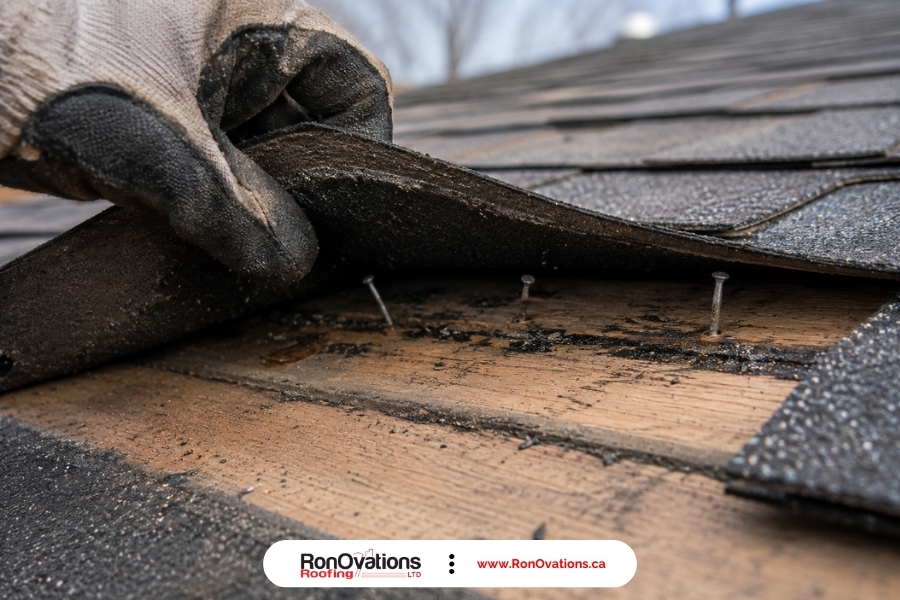
Incorrect nailing is the single most common reason manufacturers deny warranty claims, and it’s entirely outside the homeowner’s control. GAF Timberline HDZ shingles require four nails per shingle placed in a specific nailing zone printed on the shingle itself. In high-wind areas, six nails are required. IKO Cambridge has a similar nailing zone, and missing it by even half an inch can void coverage. Roofing work in Angus.
We’ve pulled shingles on tear-offs and found nails driven above the reinforcing strip (“high nailing”), nails overdriven so deep they crack the fibreglass mat, and nails left proud so the head sits above the shingle surface. Any of these conditions gives the manufacturer grounds to deny a claim. The Ontario Building Code, Section 9.26, outlines minimum fastening requirements, but manufacturer specs are often stricter than code. A crew rushing through a job on a Friday afternoon can produce hundreds of misplaced nails across a single roof. You won’t see the problem from the ground, and neither will a home inspector.
Our advice from 14 years of hands-on installs: ask your contractor whether they use pneumatic nailers with depth-adjustment settings calibrated for the specific shingle being installed. It’s a small detail that separates careful installers from fast ones. Our Barrie roofing crews calibrate nailers at the start of every job.
Mistake 2: Improper Starter Strip and Drip Edge
Using the wrong starter strip is a warranty trap that catches even experienced crews. GAF’s Golden Pledge warranty requires GAF-branded starter strips, not cut-down three-tab shingles and not a competitor’s product. Owens Corning’s enhanced warranty has the same requirement for their own starter line. Mixing brands voids the system warranty, even if the shingles themselves are installed perfectly. Our Newmarket roofing team stocks brand-matched accessories for every job to avoid this exact issue.
Drip edge is another frequent miss. The Ontario Building Code requires drip edge at eaves and rakes, and every major manufacturer’s installation manual calls for it. Without drip edge, water wicks back under the shingle edge by capillary action, rotting the fascia board and decking. We’ve seen roofs less than five years old with soft, punky fascia because the original crew skipped drip edge to save $150 in material. That $150 shortcut turned into a $3,000 fascia and soffit repair, plus a denied warranty claim. Soffit and fascia repair shouldn’t be an afterthought.
Without a proper starter strip, wind-driven rain gets underneath the first course within two to three seasons. The adhesive strip on a purpose-built starter is positioned to bond with the first course of shingles. A cut three-tab doesn’t have the adhesive in the right place, leaving the eave vulnerable.
Mistake 3: Layering New Shingles Over Old Ones
Can a roof be repaired instead of replaced under warranty?
The Ontario Building Code allows up to two layers of asphalt shingles on a roof deck. But here’s the catch: GAF, Owens Corning, IKO, and CertainTeed all void their warranties if new shingles are installed over an existing layer. The code permits it; the warranty doesn’t cover it. That distinction costs homeowners thousands of dollars every year. If you’re wondering whether a roof can be repaired instead of replaced, the answer depends on the scope of the damage and whether the original installation was single-layer and code-compliant.
Layering traps heat between the old and new shingle courses, accelerating granule loss on the top layer. It also hides rotted decking that should have been replaced during a proper tear-off. On a recent job in the Niagara region, we pulled a second layer of IKO Dynasty shingles and found three sheets of 3/8-inch plywood so soft you could push a finger through them. The homeowner had no idea. If those shingles had failed and a warranty claim was filed, the manufacturer would have denied it immediately because of the overlay. Our Niagara Falls roofing team documents every layer during tear-off.
Some warranties do cover repair of isolated defects, like a single bundle of shingles with a manufacturing flaw, but only if the original installation was code-compliant and single-layer. If your contractor suggests going over the existing roof to save on tear-off labour, understand that you’re trading a few hundred dollars in savings for the loss of your entire manufacturer warranty. Full roof replacement is almost always the smarter long-term investment.
Mistake 4: Skipping Attic Ventilation and Insulation Requirements
Does improper attic ventilation void my roof warranty?
Yes, and it’s one of the most aggressively enforced exclusions in the industry. Every major shingle manufacturer requires balanced attic ventilation that meets or exceeds the National Building Code of Canada (NBC) and Ontario Building Code Section 9.19. GAF specifies a minimum of 1 square foot of net free area (NFA) per 150 square feet of attic floor space. Owens Corning and CertainTeed have nearly identical requirements. IKO’s warranty language explicitly excludes damage caused by “inadequate ventilation or insulation.”
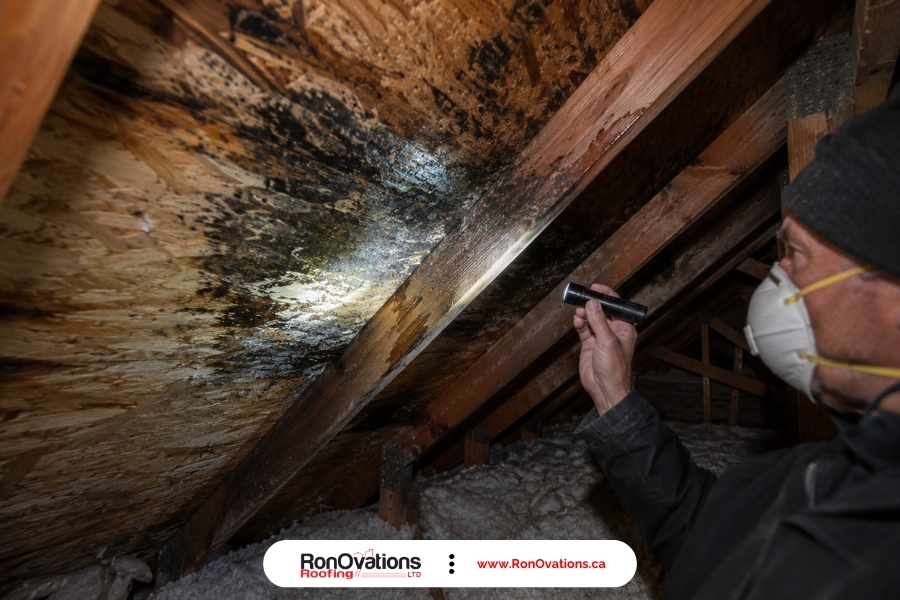
Trapped heat in an under-ventilated attic bakes shingles from below, causing premature aging that looks like a manufacturing defect but isn’t. Warm, moist air rising into a cold attic in winter causes condensation, which leads to mould on the underside of the decking and ice dams at the eaves. We’ve opened attic hatches on warranty inspection calls and felt a wall of heat in January. That’s a ventilation failure, and it voids the warranty before the first shingle curls.
Proper attic insulation, R-60 is the current recommendation for Ontario climate zones, reduces the heat load on your shingles and keeps conditioned air where it belongs. A new roof won’t fix an insulation problem, but a roof replacement is the ideal time to address ventilation deficiencies and upgrade your attic insulation because the deck is already exposed.
Does a new roof help with insulation?
A new roof by itself doesn’t add meaningful insulation value. Asphalt shingles have negligible R-value. However, the tear-off process gives your contractor direct access to the attic space, making it the most cost-effective time to upgrade insulation and correct ventilation imbalances. If your old warranty was voided due to ventilation issues, fixing those issues during the re-roof protects your new warranty from the same fate.
Mistake 5: Missing or Undersized Ice and Water Shield
Do metal roofs get ice dams even with ice and water shield?
Ontario Building Code Section 9.26.6 requires ice and water shield membrane from the eave edge to at least 900 mm (about 36 inches) inside the exterior wall line. On many Ontario homes with wide soffits, that means the membrane needs to extend 5 to 6 feet up the roof slope. We regularly find installations where the membrane stops at the fascia line, falling 2 to 3 feet short of code.
Metal roofs shed snow faster than asphalt, which reduces ice dam formation, but they aren’t immune. Do metal roofs prevent ice dams entirely? Not always. Ice can still build up at eave overhangs, especially on north-facing slopes with minimal sun exposure. Decra stone-coated steel panels and standing seam systems both require ice and water shield underneath per manufacturer specs. The self-adhering membrane seals around every nail and screw penetration, creating a watertight barrier even if meltwater backs up under the panels.
Skipping ice and water shield or cutting it short saves maybe $200 to $400 in material on a typical Ontario home. That’s a rounding error on a $10,000-plus roof job, but it’s enough to void your warranty and leave your decking exposed to the freeze-thaw cycle that defines our winters.
How Much Does a Denied Warranty Claim Cost You?
How much does a denied warranty claim cost homeowners out of pocket?
A denied warranty claim means paying 100% of the replacement cost yourself. If you’re wondering how much is a metal roof compared to asphalt when you’re footing the entire bill, the gap is significant. Here’s what that looks like in Ontario in 2026:
| Roof Type | Typical Ontario Cost Range (CAD) | What a Denied Claim Costs You |
|---|---|---|
| Asphalt shingle (bungalow, 1,200 sq ft) | $8,000 – $12,000 | Full amount out of pocket |
| Asphalt shingle (two-storey, 1,800 sq ft) | $12,000 – $18,000 | Full amount out of pocket |
| Metal roof (standing seam or stone-coated steel) | $18,000 – $35,000 | Full amount out of pocket |
| Flat roof TPO/EPDM (per 100 sq ft) | $800 – $1,200 | Full amount out of pocket |
| Decking replacement (per sheet, if rot found) | $75 – $120 per sheet installed | Added to total if hidden damage exists |
Under a non-prorated GAF Golden Pledge warranty in the first 10 years, the manufacturer covers full replacement cost plus labour. That’s potentially $15,000 or more in coverage on a two-storey home. A denied claim wipes that out completely. Even under a prorated warranty at year 15, you might recover $4,000 to $6,000 on a valid claim. Denied means zero.
The financial sting is worse when the denial is caused by something the homeowner couldn’t have seen, like high nails or a missing starter strip. You paid for a proper installation, you thought you had warranty protection, and now you’re paying again. For context on flat roof systems, Mule-Hide TPO and Carlisle EPDM both carry their own warranty requirements that mirror the same accessory-matching rules as shingle manufacturers.
How to Protect Your Warranty Before You Need It
What documentation should you keep to support a future warranty claim?
Start by hiring a certified installer. GAF Certified contractors, Owens Corning Preferred Contractors, and IKO ShieldPro Plus dealers can activate enhanced warranties that uncertified installers can’t access. We hold all three certifications plus BBB accreditation, and the difference in warranty coverage is substantial. A GAF-certified install unlocks the Golden Pledge warranty with 25 years of workmanship coverage. A non-certified install gets the standard warranty with zero workmanship protection from the manufacturer.
Keep every document related to your roof: the signed contract, the itemized invoice showing all materials used, the building permit number, the municipal inspection report, and photos of the installation in progress. Ask your contractor for photos of the completed nail pattern, ice and water shield placement, and ventilation work. These photos are your evidence if a claim is ever disputed. Our Toronto roofing team provides a full photo package with every completed project.
Register your warranty online within the manufacturer’s required window. GAF and Owens Corning both have online registration portals. Don’t assume your contractor did it. Verify it yourself. Schedule an annual roof maintenance check from a qualified professional, even if it’s just a visual inspection from the ground and a look in the attic. Manufacturers can deny claims if they determine the homeowner neglected reasonable maintenance, like clearing debris from valleys or replacing damaged flashing.
Brand-Specific Fine Print You Should Read Before Signing
Each manufacturer has warranty traps that aren’t obvious unless you read the full document. Here’s what we’ve learned from installing and claiming against these warranties over the past 14 years:
GAF Golden Pledge: Requires 100% GAF accessories, including starter strip, ridge cap, leak barrier, and roof deck protection. One non-GAF component drops you from Golden Pledge to the standard limited warranty. That’s a massive reduction in coverage.
Owens Corning Preferred Protection: Requires Owens Corning underlayment and starter. Their Owens Corning Duration shingles carry strong wind warranties, but the warranty language also references “adequate” ventilation without specifying exact NFA ratios in the warranty document itself, which gives adjusters discretion during inspections.
IKO Limited Warranty: Explicitly excludes damage from inadequate ventilation, insulation, or “abnormal” conditions. IKO’s definition of “abnormal” is broad enough to cover a lot of common Ontario weather events. Their Cambridge and Dynasty lines are solid shingles, but the warranty language is tighter than most homeowners expect.
CertainTeed SureStart: Non-prorated for 10 years, which is competitive. But it requires CertainTeed starter and hip/ridge products. Their CertainTeed Landmark shingles carry a different warranty tier than their premium lines, so confirm which document applies to your specific product.
BP Mystique: Has less detailed ventilation requirements in the warranty document compared to GAF or IKO, but the coverage limits are also lower. BP’s market presence in Ontario is strong, but their warranty infrastructure isn’t as robust as the larger manufacturers. Compare shingle options here.
Read the warranty document before you sign the installation contract. If your contractor can’t produce the specific warranty document for the shingle they’re quoting, that’s a red flag.
Frequently Asked Questions
What voids a roofing shingle warranty in Canada?
The most common warranty-voiding issues are improper nailing placement, inadequate attic ventilation, layering new shingles over old ones, missing or undersized ice and water shield, and using non-matching accessories from different manufacturers. Each brand has specific installation requirements outlined in their warranty document, and failing any single requirement can void the entire coverage. The Ontario Building Code sets minimum standards, but manufacturer specs are often stricter.
Does improper attic ventilation void my roof warranty?
Yes, every major shingle manufacturer in Canada explicitly excludes damage caused by inadequate ventilation. GAF requires 1 square foot of net free area per 150 square feet of attic floor. IKO’s warranty language excludes damage from “inadequate ventilation or insulation” without further qualification. If a warranty adjuster finds blocked soffit vents or missing ridge vents during an inspection, the claim will almost certainly be denied regardless of the shingle’s condition.
Can I transfer my roofing warranty when I sell my home?
Most manufacturers allow one transfer to a new homeowner, but you must notify them within a strict window. GAF and Owens Corning require written notice within 60 days of the sale. IKO requires written notice with no specific public deadline, so check your document. CertainTeed allows transfers but may reduce the warranty term for the second owner. Missing the notification deadline can void the warranty entirely, so handle the transfer during your closing process.
What is the difference between prorated and non-prorated roof warranty?
A non-prorated warranty covers the full cost of replacement materials, and sometimes labour, for a defined period. A prorated warranty reduces the manufacturer’s payout each year based on the shingle’s age. Most enhanced warranties, like GAF Golden Pledge, are non-prorated for the first 10 years and then shift to prorated coverage. A 50-year prorated warranty at year 20 might reimburse only 30-40% of material cost, leaving you responsible for the rest.
How much does a denied warranty claim cost homeowners out of pocket?
In Ontario, a full asphalt shingle replacement runs $8,000 to $18,000 depending on home size and roof complexity. Metal roofing ranges from $18,000 to $35,000. A denied warranty claim means covering 100% of that cost yourself. Under a valid non-prorated warranty in the first 10 years, the manufacturer would cover the full replacement. Denial eliminates that coverage entirely, turning what should have been a covered repair into a five-figure expense.
Protecting Your Roof Investment
A roofing warranty is only as strong as the installation behind it. The five mistakes outlined here, wrong nailing, improper starters, layering over old shingles, ventilation failures, and undersized ice and water shield, account for the vast majority of denied claims we’ve seen across Ontario. None of them are visible from the ground, and none of them show up during a standard home inspection. The only reliable protection is hiring a certified installer who follows manufacturer specs to the letter, keeping thorough documentation, and reading the warranty document before the first shingle goes on. Your roof is likely the most expensive exterior component of your home. Make sure the warranty actually covers it.