
The Gap Between Warranty Claims and Real Roof Lifespan in Canada
A roof in Canada lasts 15 to 50 years depending on material, with architectural asphalt shingles averaging 20 to 25 years and standing-seam metal exceeding 45 years in our tear-off data. Since 2012, we’ve torn off and replaced over 500 roofs across Ontario, Manitoba, and Alberta. That volume of tear-off data tells a story manufacturer brochures won’t: some products consistently over-deliver on their warranty, while others fail 8 to 12 years early. The gap between a printed warranty number and actual field performance is often a full decade.
We’re GAF Certified, Owens Corning Preferred Contractors, and IKO ShieldPro Plus installers, so we see every major brand at the end of its life. That perspective shapes everything below. If you’re trying to figure out when your roof will actually need replacing, or which material gives you the best return, this data is more useful than any warranty document. Roofing work in Coldwater.
Why do manufacturer warranty numbers mislead Canadian homeowners?
Warranties are marketing tools first and coverage documents second. Most shingle warranties are prorated, meaning coverage drops sharply after the first 10 to 15 years. They cover manufacturing defects, not wear from ice damming, UV exposure, or wind uplift. A shingle that delaminates due to a factory flaw is covered. A shingle that curls and loses granules after 18 Canadian winters isn’t. Our Roofing Company In Parry Sound roofing service.
The Ontario Building Code (OBC) sets minimum standards for roofing assemblies, but it doesn’t regulate how long a product should last. That’s left entirely to the manufacturer’s claims. Our tear-off records show that the same IKO Cambridge shingle performs differently in Barrie than in Calgary, yet the warranty is identical. Climate-specific performance data simply doesn’t exist in most warranty literature. Roofing Company In Huntsville homeowners.
Is a 50-year shingle warranty realistic?
No. We’ve never torn off a 50-year-old asphalt shingle. Not once. Shingles marketed with 50-year or “lifetime” warranties in Canada rarely deliver more than 25 to 30 years of real performance. Freeze-thaw cycles, ice damming, and UV degradation break down the asphalt binder and granule adhesion far faster than controlled lab testing suggests. After 10 to 15 years, the prorated warranty structure means you’d receive pennies on the dollar for a claim anyway. If a salesperson leads with the warranty length, that’s a red flag. Maintenance tips on how to care.

Asphalt Shingles: The 20-Year Reality Behind 25- to 50-Year Labels
Asphalt shingles cover roughly 75% of Canadian homes, and for good reason: they’re affordable, widely available, and perform well when installed correctly. But their real lifespan consistently falls short of marketing claims. Our tear-off data paints a clear picture of what you can actually expect. Insulation in Canada code failures.
How long do asphalt shingles really last in Canada?
Three-tab shingles, now mostly phased out, were marketed at 20 to 25 years but typically lasted only 14 to 18 years in Ontario and Manitoba before granule loss and curling became severe. We still tear these off regularly from homes built in the early 2000s. Claim denied (5 common mistakes).
Architectural (laminate) shingles are the current standard. Here’s what we’ve seen at tear-off: Materials Canada honest roofer review.
- GAF Timberline HDZ: Consistently reaches 22 to 28 years in well-ventilated Ontario attics. The LayerLock technology keeps tabs sealed longer than older Timberline models. This is the shingle that most often meets or slightly exceeds its warranty window.
- Owens Corning Duration: Similar performance to the HDZ, with 22 to 26 years being typical. The SureNail strip holds up well against wind uplift, which matters in exposed prairie locations.
- IKO Cambridge: Delivers 20 to 24 years in Ontario, though we see earlier edge curling on south-facing slopes. It’s a solid mid-range product, but it doesn’t quite match the HDZ or Duration in our data.
- IKO Dynasty: Performs slightly better than the Cambridge, with the ArmourZone reinforcement adding 1 to 3 years of effective life in high-wind zones.
- BP Mystique: Holds colour well but loses granule adhesion faster in Alberta’s chinook wind zones. We’d estimate 18 to 22 years in Calgary versus 21 to 25 in the GTA.
- CertainTeed Landmark: A reliable performer at 20 to 25 years. The NorthGate variant, designed for hail zones, is one of the few shingles where Alberta performance closely matches the warranty claim.
Which asphalt shingle brands hold up best in freeze-thaw climates?
GAF Timberline HDZ and Owens Corning Duration are the two brands that most consistently meet their stated lifespan in our tear-off records. Both use SBS-modified asphalt in their premium lines, which stays flexible through freeze-thaw cycling instead of becoming brittle. CertainTeed NorthGate deserves mention for Alberta specifically, where its impact resistance translates to real longevity. A 20-year-old shingle at tear-off is often brittle enough to snap in your hands, with granules filling the gutters and dark algae streaks across the north face.
Why Metal Roofs Outlast Their Warranty
Metal roofing is the one category where real-world performance routinely exceeds the warranty. Standing-seam steel panels carry 40-year warranties, but we rarely replace them due to material failure. When we do remove a metal roof, it’s almost always for an aesthetic update or a building renovation, not because the roof failed. If you’re wondering how much is a metal roof compared to shingles, the upfront cost is higher, but the per-year value tells a different story.
Do metal roofs last longer than shingles in cold climates?
Yes, and it isn’t close. Metal roofs shed snow efficiently, resist ice damming, and don’t suffer from granule loss or asphalt degradation. A properly installed standing-seam steel roof in Ontario can last 45 to 60+ years. Stone-coated steel products like Decra deliver 30 to 50 years, though the stone coating itself can loosen in high-wind areas after 20+ years. That’s a cosmetic issue more than a structural one.
The metal roof lifespan advantage in Ontario and Manitoba comes down to thermal cycling. Steel expands and contracts predictably, and modern concealed-fastener systems accommodate that movement. Asphalt, by contrast, becomes increasingly rigid with age and eventually cracks.
What maintenance does a metal roof need in Canada?
Metal roofs aren’t maintenance-free, despite what some installers claim. Proper metal roof maintenance is straightforward but essential. Here’s what we recommend:
- Inspect exposed fasteners every 5 to 7 years. Neoprene washers compress and crack over time, allowing water entry.
- Refresh sealant at penetrations (vents, skylights, pipe boots) every 8 to 10 years.
- Check for galvanic corrosion where dissimilar metals meet, especially at flashing transitions.
- Clear debris from valleys and behind dormers where leaves and needles trap moisture.
Poor installation, particularly of flashing and underlayment, is the number one cause of premature metal roof failure. The material itself almost never gives out first.

Flat Roof Systems: TPO, EPDM, and Modified Bitumen Compared
Flat roofs face tougher conditions than sloped roofs in Canada. Ponding water, ice loading, and UV exposure all concentrate on a surface with minimal drainage slope. Here’s what our flat roof tear-off data shows.
How long does a flat roof last in Canada?
Mule-Hide TPO membranes carry 20- to 30-year warranties but typically deliver 18 to 25 years depending on UV exposure and drainage design. Carlisle EPDM can reach 25 to 30 years if seams are properly adhered, though seam separation is common after 15+ years of freeze-thaw cycling. Modified bitumen (torch-on or peel-and-stick) lasts 15 to 22 years and performs well on low-slope additions, but it degrades faster than single-ply membranes.
Which flat roof membrane handles Canadian winters best?
EPDM is our top pick for Canadian winters. It stays flexible down to -45°C, which matters in Manitoba and northern Ontario. TPO is a strong second choice, especially for commercial or high-UV applications. Modified bitumen works well for smaller residential flat sections but doesn’t match the longevity of EPDM or TPO on larger surfaces. Regardless of membrane, proper drainage slope (minimum 1/4 inch per foot) and tapered insulation are what separate a 15-year flat roof from a 25-year one.
The Three Climate Factors That Shorten Roof Lifespan the Most
Material choice matters, but climate is the variable that creates the biggest gap between warranty claims and real performance. Three factors dominate our tear-off data.
What climate factors shorten roof lifespan the most?
Freeze-thaw cycling is the single biggest lifespan reducer. Ontario and Manitoba experience 30 to 60+ freeze-thaw cycles per winter. Each cycle forces moisture into micro-cracks in shingles, flashing, and vent boots, then expands as it freezes. Over 20 winters, that’s over 1,000 expansion events weakening every seam and seal on your roof.
Ice damming is the second factor. It’s especially common in Ontario homes with inadequate attic insulation. Warm attic air melts snow on the upper roof, and the meltwater refreezes at the cold eaves, backing up under shingles and soaking the decking. We’ve torn off roofs where the OSB decking was black with rot from ice dam damage alone.
Wind uplift rounds out the top three. Alberta’s chinook winds and prairie storms can lift shingle tabs and break sealant bonds. UV degradation also accelerates granule loss on south-facing slopes, but wind and freeze-thaw do more cumulative damage.
How do freeze-thaw cycles damage a Canadian roof?
Each cycle forces water into tiny cracks, where it freezes and expands by roughly 9%. That expansion widens the crack. The next thaw lets more water in. Over years, this process weakens shingle adhesion, cracks flashing sealant, and deteriorates vent boot rubber. It’s why the same shingle lasts 24 years in Vancouver (few freeze-thaw cycles) but only 20 in Ottawa (50+ cycles per winter).
Attic Ventilation and Underlayment: The Hidden Lifespan Multipliers
You can install the best shingle on the market and still lose 5 years of life if the attic ventilation is wrong. We’ve seen this pattern hundreds of times.
Does attic ventilation really extend roof lifespan?
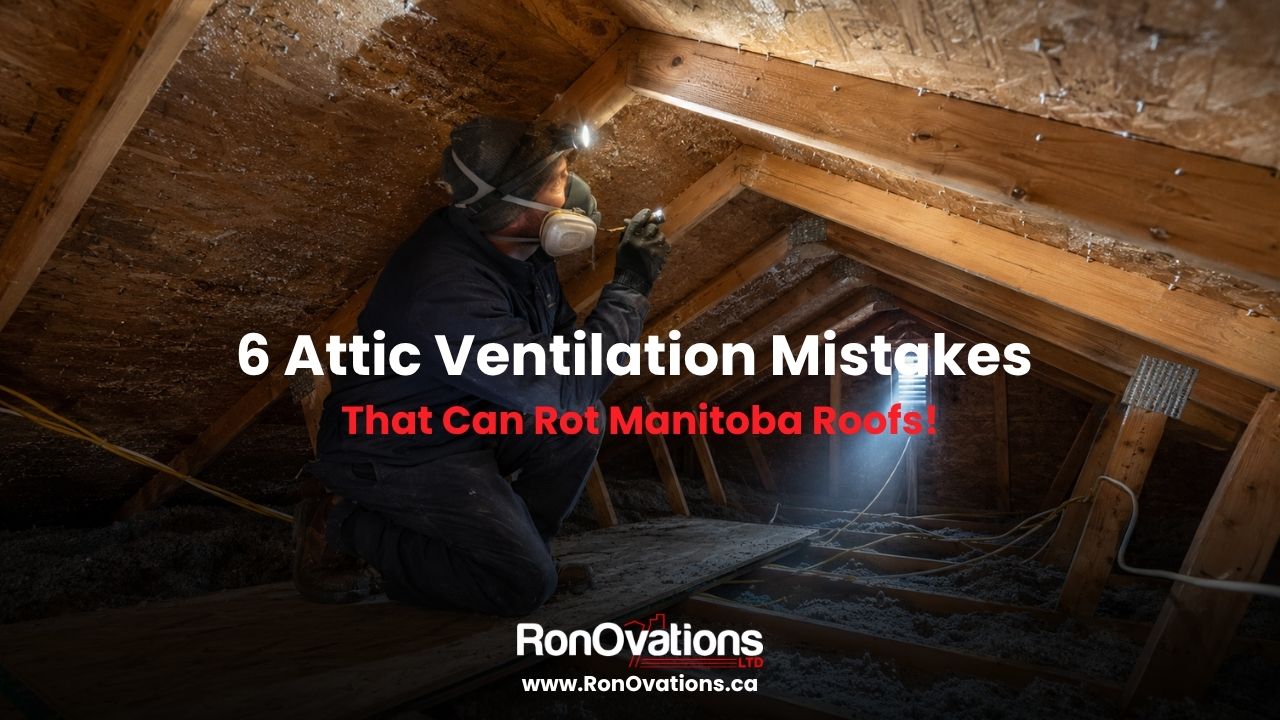
Absolutely. Balanced ventilation with soffit intake and ridge exhaust consistently adds 3 to 5 years to a shingle roof’s lifespan in our data. The OBC requires a 1:300 net free ventilation area ratio, but many homes built before 1990 don’t meet this standard. On a hot July day, a well-ventilated attic smells dry and feels noticeably cooler. A poorly ventilated one smells musty, and you can feel the damp OSB underfoot. That moisture is cooking your shingles from below.
What underlayment should I use under shingles in Canada?
Ice-and-water shield is non-negotiable at eaves, valleys, and penetrations. The OBC requires it at least 36 inches (900 mm) up from the eave edge. We install it 48 inches up as standard practice because ice dams don’t read building codes. Synthetic underlayments like GAF FeltBuster resist moisture better than traditional #15 felt and don’t wrinkle as easily, which prevents telegraphing through the shingles. Skipping proper underlayment is the fastest way to rot your decking.
Cost Per Year of Life: The Number That Actually Matters
Upfront cost is what most homeowners focus on, but cost per year of life is the metric that reveals true value. A cheaper roof that lasts 20 years can cost more annually than an expensive roof that lasts 50. Understanding the average cost of roof replacement alongside realistic lifespan data is the key to making a smart decision.
| Material | Typical Installed Cost (CAD, Ontario) | Real Lifespan (Years) | Cost Per Year of Life |
|---|---|---|---|
| Three-Tab Asphalt | $6,000 – $9,000 | 14 – 18 | $430 – $640 |
| Architectural Asphalt | $8,000 – $14,000 | 20 – 25 | $400 – $635 |
| Premium Asphalt (SBS-Modified) | $10,000 – $16,000 | 25 – 30 | $400 – $640 |
| Stone-Coated Steel (Decra) | $18,000 – $25,000 | 30 – 50 | $360 – $550 |
| Standing-Seam Steel | $20,000 – $30,000 | 45 – 60+ | $335 – $665 |
| EPDM Flat Roof | $8,000 – $15,000 | 22 – 30 | $365 – $680 |
| TPO Flat Roof | $9,000 – $16,000 | 18 – 25 | $500 – $640 |
What is the cost per year of life for each roofing material?
Standing-seam metal wins on a per-year basis for homeowners who plan to stay 15+ years. At roughly $335 to $665 per year, it’s competitive with or cheaper than architectural asphalt at $400 to $635 per year, despite costing twice as much upfront. Stone-coated steel (Decra) sits in a sweet spot for homeowners who want metal durability with a shingle aesthetic. The average cost of roof replacement matters less than what you’re paying per year of actual protection.
Is a metal roof cheaper than shingles over 30 years?
In most cases, yes. Over 30 years, you’ll likely need one metal roof versus one and a half asphalt roofs (the first lasting 20 to 22 years, then a partial or full replacement). When you factor in the second tear-off, disposal fees, and re-installation, the total 30-year cost of asphalt often exceeds metal. The math gets even more favourable for metal over 40 to 50 years.
How Much Does Metal Roofing Cost Across Canada?
The cost of a metal roof varies significantly by province, profile, and gauge. In Ontario, the cost of metal roof installations for a standard 1,500 sq ft home ranges from $20,000 to $30,000 for standing-seam steel and $18,000 to $25,000 for stone-coated steel like Decra. How much does metal roofing cost in other provinces? Manitoba pricing runs about 5% to 10% lower due to reduced labour costs, while Alberta sits roughly on par with Ontario.
These figures include tear-off of the existing roof, new underlayment, and all flashing. The cost of metal roof Ontario projects can climb higher for complex roof geometries with multiple dormers, valleys, or skylights, where custom flashing work adds labour hours. For a straightforward hip or gable roof, expect to land in the lower half of those ranges.
Province-by-Province: How Ontario, Manitoba, and Alberta Climates Affect Roof Longevity
The same shingle doesn’t last the same number of years across Canada. Our tear-off data shows clear provincial patterns.
Ontario: Moderate freeze-thaw cycling (30 to 50 cycles per winter in southern Ontario) combined with high summer humidity accelerates algae growth and granule loss. Ice damming is common in older homes with poor attic insulation. Asphalt shingles average 20 to 25 years here, which is close to the national best case for this material.
Manitoba: Extreme cold (sustained -30°C to -40°C stretches) makes shingles brittle. Fewer but more severe freeze-thaw events cause deeper cracking. Wind-lift damage is common on exposed prairie lots. We see asphalt shingles lasting 18 to 23 years in Winnipeg, about 2 years less than comparable Ontario installations.
Alberta: Chinook winds, hail, and rapid temperature swings (a 20°C swing in hours during chinook events) are brutal on roofing. The same IKO Cambridge shingle that lasts 20 to 24 years in Ontario delivers only 17 to 21 years in Calgary. Impact-rated shingles like CertainTeed NorthGate are worth the premium here.
Do roofs last longer in Ontario than in Alberta?
Generally, yes. Ontario’s climate is less extreme than Alberta’s, and our data shows a consistent 2 to 4 year advantage for the same product installed in Ontario versus Alberta. Manitoba falls in between, with extreme cold offsetting the lower hail risk compared to Alberta.
What makes Manitoba’s climate especially hard on roofs?
The sustained extreme cold is the main culprit. When shingles sit at -35°C for weeks, the asphalt binder becomes glass-like. Any wind event during those cold snaps can crack tabs or break sealant bonds. Proper attic ventilation is even more critical in Manitoba because the temperature differential between a heated home and the outdoor air is enormous, creating strong convective forces that drive moisture into the roof assembly.
When to Repair vs. When to Replace Your Roof
Not every roof problem means a full replacement. Here’s how we think about the decision.
Repair makes sense when damage is localized: a few missing shingles, one leaking flashing, or minor wind lift on a roof that’s less than 60% through its realistic lifespan. A $300 to $800 repair can buy you several more years.
Replacement is the right call when granule loss is widespread, multiple areas are leaking, or the roof has passed 75% of its realistic lifespan. The OBC allows two layers of asphalt shingles, but we strongly recommend tearing off to one layer. Layering traps heat and hides rot, and it voids most manufacturer warranties.
How do I know if my roof needs full replacement?
Walk your attic with a flashlight. If the decking feels spongy underfoot, that’s rot, and repair won’t fix it. From the ground, look for widespread granule loss (bare black patches), curling edges, and sagging between rafters. If you’re seeing daylight through the decking, you’re past due. On-site work for a standard 1,500 sq ft tear-off and re-shingle takes 1 to 3 days. The total roof replacement timeline, including permit application, material ordering, the work itself, cleanup, and final inspection, usually runs 2 to 4 weeks.
How to Get the Most Years Out of Whatever Roof You Have
The best roof maintenance is boring and consistent. Here’s what actually moves the needle:
- Schedule a visual inspection every spring and fall. Look for lifted shingles, cracked caulking, and debris in valleys.
- Keep trees trimmed at least 6 feet from the roof surface. Overhanging branches drop debris, trap moisture, and provide shade that encourages moss and algae.
- Ensure attic ventilation meets or exceeds the OBC 1:300 ratio. If your attic is hot and humid in summer, it’s cooking your shingles.
- Address small repairs immediately. A $200 flashing repair today prevents a $2,000 decking replacement next year.
- For metal roofs, inspect fasteners and sealants every 5 to 7 years. This is the single most important metal roof maintenance task.
Invest in proper ventilation and a competent installation crew. In our experience, these two factors often matter more than the shingle brand itself. A well-installed mid-range shingle on a properly ventilated roof will outlast a premium shingle on a poorly ventilated one every time.
Frequently Asked Questions
How long does a roof last in Canada?
Most Canadian roofs last 15 to 50 years depending on the material. Standard architectural asphalt shingles typically deliver 20 to 25 years of real performance, while standing-seam metal roofs regularly exceed 45 years. Climate zone, attic ventilation, and installation quality affect lifespan as much as the material itself. Freeze-thaw cycles and ice damming are the biggest lifespan reducers across Ontario, Manitoba, and Alberta.
Is a 50-year shingle warranty realistic in Canada?
No. Shingles marketed with 50-year or lifetime warranties rarely deliver more than 25 to 30 years of real performance in Canadian climates. Freeze-thaw cycles, ice damming, and UV exposure degrade shingles faster than lab conditions suggest. The warranty itself is often heavily prorated after the first 10 to 15 years, meaning actual coverage diminishes significantly over time.
How long does it take to replace a roof on a 1,500 sq ft house?
On-site crew work for a standard asphalt tear-off and re-shingle on a 1,500 sq ft home typically takes 1 to 3 days, depending on roof complexity, number of layers being removed, and weather. The total project timeline, including permit application, material ordering, the work itself, cleanup, and final inspection, usually runs 2 to 4 weeks from start to finish.
What is the cost per year of life for different roofing materials?
A typical Ontario architectural asphalt roof costing $8,000 to $14,000 and lasting 20 to 25 years works out to roughly $400 to $635 per year. A standing-seam metal roof at $20,000 to $30,000 lasting 45 to 60+ years costs approximately $335 to $665 per year. Metal often wins on a per-year basis, especially if you plan to stay in your home for 15 years or more. Stone-coated steel (Decra) falls in between at roughly $360 to $550 per year.
Do metal roofs last longer than shingles in cold climates?
Yes. Metal roofs consistently outlast asphalt shingles in cold climates by 20 to 30 years. They shed snow efficiently, resist ice damming, and don’t suffer from granule loss or asphalt degradation. A properly installed standing-seam steel roof in Ontario can last 45 to 60+ years compared to 20 to 25 years for architectural asphalt shingles.
Can a roof be repaired instead of replaced?
Yes, if the damage is localized and the roof is less than 60% through its realistic lifespan. A few missing shingles, one leaking flashing, or minor wind lift are all repairable. However, widespread granule loss, multiple leaks, or spongy decking typically means full replacement is the more cost-effective path.
Understanding the real lifespan of roofing materials in Canada, backed by actual tear-off data rather than warranty marketing, helps you make a smarter investment. Whether you’re weighing asphalt shingle lifespan against metal roof longevity, or trying to squeeze a few more years out of your current roof, the numbers above reflect what we’ve actually seen on Canadian homes since 2012. For more on roofing options in Ontario, visit our Ontario roofing services page.