Why We Wrote This Checklist (And the Broken Windshield That Started It)
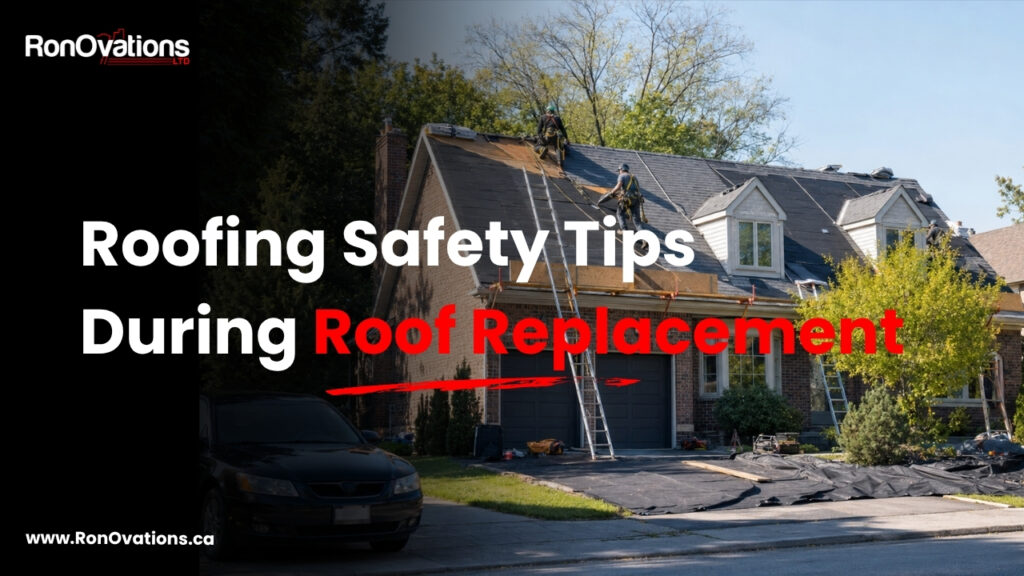
Move your car before the crew arrives. That’s the single most overlooked roofing safety tip during roof replacement, and it’s the one that cost a Barrie homeowner a windshield in 2019. A bundle of IKO Cambridge shingles slid off wet decking, dropped two storeys, and punched straight through the glass of an SUV parked under the eave. Totally preventable. If you’re looking for a Barrie roofing company that takes these precautions seriously, credentials and documented safety protocols matter.
We didn’t write this checklist because it seemed like a good content idea. We wrote it because we’ve spent over a decade cleaning up the consequences of things homeowners didn’t know they should do. A loose dog in Winnipeg nearly pulled a crew member off a ladder. A toddler in Oshawa wandered into the driveway during tear-off. Roofing nails punctured a neighbour’s tire in Red Deer. Every one of those incidents could’ve been avoided with a five-minute conversation the day before. Whether you’re working with our Roofing Company in Coldwater or one of the many roofing companies Winnipeg homeowners rely on, the same preparation applies.Fall protection is part of the crew’s worksite planning, not an optional accessory. Our guide to Canadian roof safety harness requirements explains the provincial thresholds, equipment and training rules.
RonOvations has been replacing roofs since 2012. We’re GAF Certified, an Owens Corning Preferred Contractor, IKO ShieldPro Plus certified, and BBB Accredited. Those credentials require documented safety protocols, but credentials alone don’t prevent incidents. Homeowner cooperation does. Here’s what we wish every homeowner knew before, during, and after replacement day. Roofing Company in Parry Sound homeowners have told us this checklist changed how they prepared for their projects.
Roof Replacement Safety Precautions Your Crew Expects You to Know
Is it safe to stay home during a roof replacement?
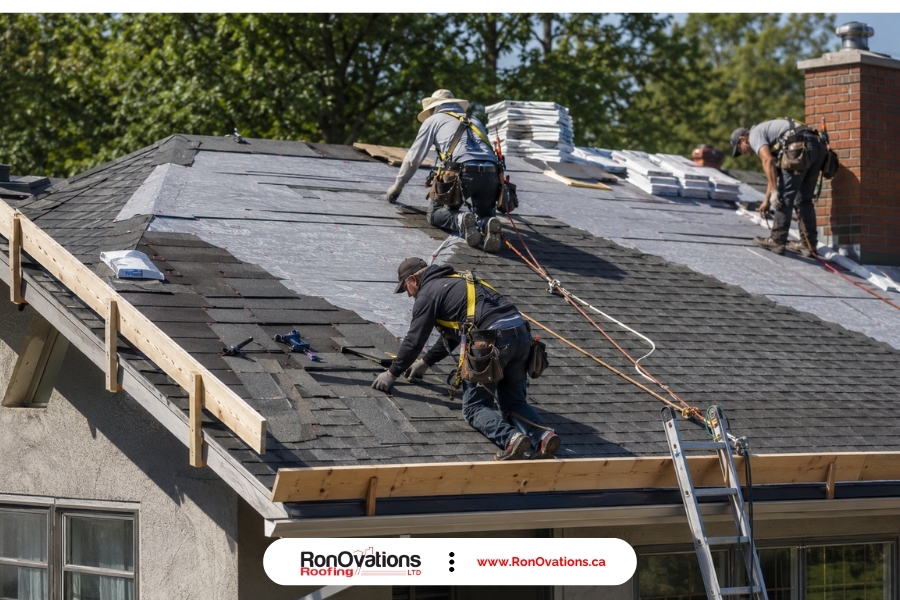
Yes, staying home is fine. But staying aware is non-negotiable. Our crews use fall arrest systems, full-body harnesses, and toe boards on every job. Ontario’s Occupational Health and Safety Act (OHSA) requires fall protection for any work surface above 3 metres, and the Ontario Building Code (OBC) Part 4 construction safety provisions apply to residential projects. That said, the homeowner’s side of the equation matters just as much. Our Roofing Company in Huntsville roofing service.
Respect the exclusion zone. Everything within 2 to 3 metres of the roofline is an active debris area where old shingles, nails, flashing, and felt paper fall throughout the day. Don’t walk through it. Don’t let anyone else walk through it. If you work from home, set up in a room on the opposite side of the house from the active tear-off zone. Expect steady noise from pneumatic nail guns, the thud of shingle bundles landing on the roof, and compressor hum from roughly 7 a.m. to 5 p.m. How long does a roof last in Canada.
One thing we’ve noticed: homeowners who stay home tend to hover near windows or step outside to watch. That’s natural, but it puts you in the drop zone. If you want to check progress, ask the crew lead for a walkthrough during a scheduled break. Insulation in Canada code failures.
What should homeowners do the night before roof replacement starts?
The night before is when most of your prep should happen. Here’s the checklist we hand out at the pre-job walkthrough: Best roofing materials in Canada.
- Move all vehicles at least 15 metres from the house, including anything parked in the driveway or along the curb near the work zone.
- Take down patio furniture, hanging baskets, wind chimes, and bird feeders.
- Pull satellite dishes if the crew has flagged them for removal.
- Remove garden hoses, sprinkler heads, and decorative stones from the perimeter.
- Unlock side gates so the crew can access all elevations without delay.
- Clear a staging area near the driveway for material delivery (shingle pallets, dump bin, compressor).
We can’t tell you how many times we’ve arrived at 7 a.m. to find trampolines, inflatable pools, and patio sets still sitting in the drop zone. Moving obstacles eats into the crew’s productive hours and pushes the project timeline. A clear site means we start tearing off on schedule instead of rearranging your backyard.
Pets, Kids, and the Drop Zone
Can kids play outside during a roof replacement?
No. Full stop. The drop zone is not a playground. Old shingles weigh roughly 30 kg per bundle, and they come off the roof in irregular chunks that bounce unpredictably. Exposed nails point in every direction. Flashing edges are sharp enough to cut through work gloves, let alone bare skin.
We had a job in Oshawa where a toddler slipped out the back door and walked into the driveway during active tear-off. The crew spotted the child before anything happened, but it shook everyone on site. Arrange a playdate, send the kids to a relative’s house, or keep them in a room with the doors locked and a movie on. It’s one day.
What should I do with pets during a roof replacement?
Confine pets to an interior room, take them to a friend’s house, or board them for the day. In Winnipeg, a homeowner’s golden retriever bolted through an open gate and ran straight through the work zone, nearly knocking a crew member off a ladder. The dog wasn’t hurt, but the situation could’ve ended very differently.
Even if your pet doesn’t escape, the noise is a problem. Pneumatic nail guns fire at roughly 100 decibels, and the vibration travels through the entire structure. Dogs panic. Cats hide. Birds stress. We’ve seen dogs chew through screen doors trying to flee the sound. Keep them contained, ideally in a basement or interior bathroom where the noise is dampened.
Protecting Your Landscaping, Driveway, and Property
How do I protect my landscaping and driveway during roofing?
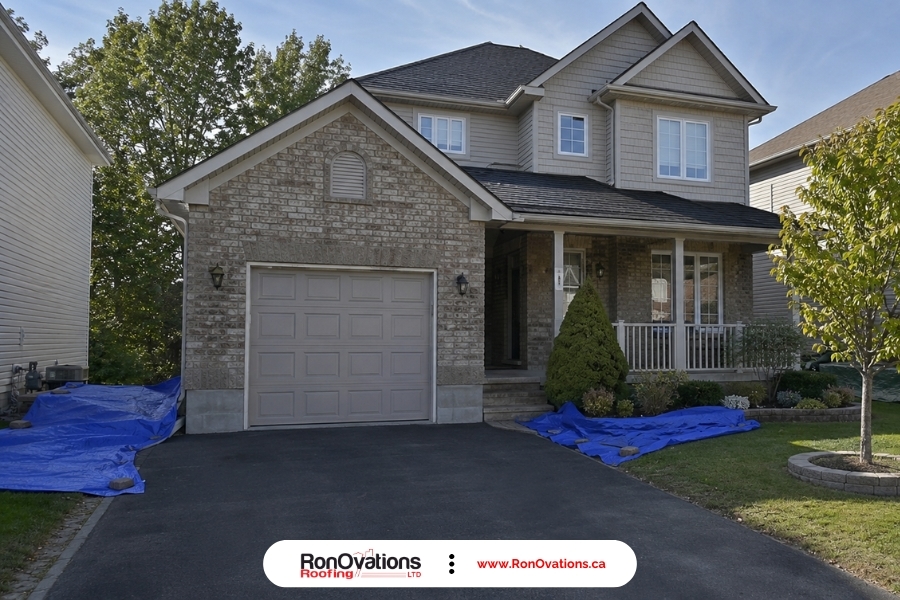
A professional crew handles most of the protection, but you should know what to expect and what to document. At RonOvations, tarps go down over shrubs, flower beds, and any fragile hardscaping before the first shingle comes off. Plywood sheets go under the dump trailer to prevent driveway cracking from the concentrated weight. Homeowners in Vaughan who need roof repair in Vaughan or a full replacement should expect the same level of property protection from any reputable contractor.
| Property Area | Protection Method | Homeowner Action |
|---|---|---|
| Flower beds and shrubs | Heavy tarps laid by crew | Flag delicate plants the night before |
| Driveway and walkways | Plywood under dump trailer and staging area | Move vehicles; photograph surface condition |
| Lawn and garden | Tarps along roofline perimeter | Remove portable items (hoses, sprinklers, decor) |
| Windows and siding | Crew controls debris trajectory during tear-off | Close all windows; note any pre-existing damage |
| Neighbour’s property | Tarps on shared fence lines if needed | Give neighbours a heads-up about noise and timeline |
Granule runoff from old asphalt shingles can stain light-coloured concrete if it isn’t swept promptly. Photograph your landscaping, driveway, walkways, and siding before work begins. That documentation protects both you and the contractor if there’s a dispute about pre-existing conditions.
One detail most homeowners miss: check your air conditioning unit. If it sits near the roofline, debris can clog the condenser fins. Ask the crew to tarp it or shut it down during tear-off.
After the Crew Leaves: Nails, Debris, and the Magnetic Sweep
How do roofers clean up nails after a roof replacement?
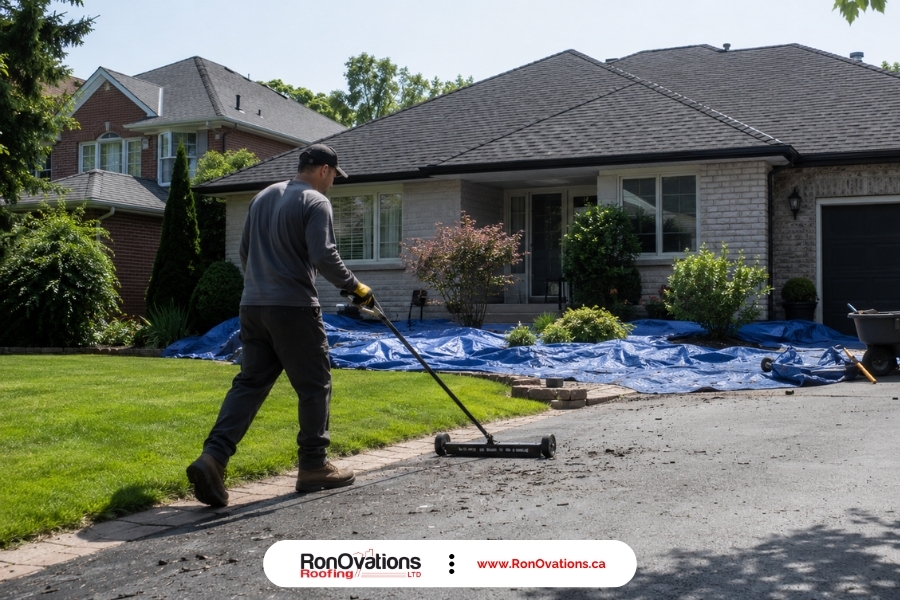
Every reputable crew uses a magnetic nail sweeper, sometimes called a rolling magnet or nail roller. It’s a wide magnetic bar on wheels that picks up ferrous fasteners from grass, gravel, and asphalt. A good crew runs it at least twice: once mid-project after the bulk of tear-off is done, and again at final cleanup.
Even with two passes, a stray nail can hide in tall grass, mulch, or gravel. We’ve seen flat tires from nails that ended up 10 metres from the house, carried there on a crew member’s boot sole. We’ve also treated a dog with a punctured paw pad from a roofing nail buried in the lawn.
Should I check my yard for roofing nails after the crew finishes?
Absolutely. Walk the entire perimeter the next day in hard-soled shoes. Pay special attention to the driveway, sidewalk edges, and any gravel areas. Check your eavestroughs for shingle granules and felt scraps that can clog the system and cause water backup. If you find more than a handful of nails, call your contractor. Cleanup isn’t an extra charge; it’s part of the job.
How to Verify a Contractor’s Safety Credentials Before Signing
How do I verify a roofer’s safety certifications in Canada?
Start with three documents: a current WSIB clearance certificate, proof of working-at-heights training, and a liability insurance certificate. In Ontario, working-at-heights training has been mandatory since 2015 for anyone working on a construction project where fall protection is required. Crews must carry proof of completion on site.
In Alberta and Manitoba, look for COR (Certificate of Recognition) certification, which is the national standard for occupational health and safety management systems. You can verify a contractor’s WSIB status online through the WSIB website at no cost. Our Roofing Company in Orillia team can walk you through the verification process if you’re unsure what to look for.
Manufacturer certifications add another layer. GAF Certified contractors, for example, must meet specific installation quality and business practice standards. IKO ShieldPro Plus certification requires documented training on IKO products like Cambridge and Dynasty shingles. These aren’t just marketing badges; they’re tied to warranty eligibility and installation standards.
Who is liable if a roofer gets injured on my property in Ontario?
Under OHSA, the roofing contractor is generally the “constructor” and bears primary liability for workplace safety. However, if your contractor doesn’t carry WSIB coverage, you as the homeowner could face financial liability for workplace injuries that occur on your property. That’s not a theoretical risk. It happens.
Always request a current WSIB clearance certificate and a liability insurance certificate with a minimum $2 million policy before any work begins. If a contractor can’t produce these documents, that’s your answer about whether to hire them. Roofing Company in Midland.
How Safety Shortcuts Inflate the Real Cost of Roof Replacement
Why do some roofing quotes seem suspiciously cheap?
Because safety costs money, and cutting it is the easiest way to lower a quote. Contractors who skip WSIB premiums, don’t invest in fall arrest equipment, or use untrained labour can undercut legitimate companies by 20 to 30 percent. The homeowner absorbs the risk.
In Ontario, the average cost of roof replacement for a standard 1,200 to 1,800 sq ft bungalow ranges from $8,000 to $14,000 CAD for asphalt shingles, while a two-storey home of similar footprint typically runs $12,000 to $18,000 CAD or more due to increased pitch complexity, additional safety rigging, and higher labour hours. Quotes significantly below those ranges should raise questions. Where’s the savings coming from? Proper tarping, magnetic sweeps, dump bin placement, harness systems, and crew training all cost time and money. We’ve re-done enough botched jobs to know that the cheapest roof replacement is rarely the safest one. Roofing Company in Wasaga Beach.
Metal roofing and flat roof systems (TPO, EPDM, modified bitumen) have their own safety protocols and cost structures. If you’re wondering how much is a metal roof, expect to pay $18,000 to $35,000 CAD or more for a typical residential installation, depending on panel type and roof complexity. A Mule-Hide TPO installation, for instance, involves open-flame or hot-air welding that requires specific training and fire watch procedures. Carlisle EPDM systems use adhesives with ventilation requirements. These aren’t corners you want your contractor cutting. Roofing Company in Innisfil.
Seasonal and Weather Factors That Change the Safety Picture
Is roof replacement safer in summer or fall?
Each season brings its own hazards in Canada. Spring means wet or icy decking from freeze-thaw cycles, which is a serious slip risk. Summer brings heat exhaustion; crews working on dark GAF Timberline HDZ shingles in July can face surface temperatures above 65 degrees Celsius. Fall is generally the sweet spot for scheduling, but late-fall jobs risk snow load on exposed decking and shortened daylight hours.
Winter installations aren’t impossible, but they’re harder. BP Mystique and CertainTeed Landmark shingles become brittle below minus 5 Celsius and can crack during handling. Adhesive strips won’t seal properly until warmer weather arrives, which means the shingles are vulnerable to wind uplift for months. Owens Corning Duration shingles handle cold-weather installation somewhat better thanks to their SureNail strip, but even they have temperature limitations.
Don’t pressure your crew to work in unsafe weather. A one-day delay beats an injury, a voided manufacturer warranty, or a compromised installation. If your contractor pushes through dangerous conditions to meet a deadline, that tells you something about their priorities.
The Post-Replacement Walkthrough: What to Inspect Yourself
What should I check after my roof replacement is finished?
You don’t need to climb a ladder. Most of your inspection can happen from the ground and from inside the attic. Here’s what to look for:
- Shingle lines should be straight and consistent. Wavy courses suggest rushed installation.
- Flashing around chimneys, vents, and skylights should sit flat with visible sealant at transitions.
- Drip edges should extend past the fascia and direct water into the eavestrough, not behind it.
- In the attic, look for daylight peeking through the decking. Any light means a gap that will leak.
- Walk the perimeter for stray nails and check eavestroughs for dents from falling debris.
- Confirm downspouts are still connected and directing water away from the foundation.
Ask for the manufacturer warranty registration number and keep a copy of the WSIB clearance certificate with your project file. If you’ve got Decra stone-coated steel panels, schedule periodic metal roof maintenance checks since thermal expansion and contraction can loosen screws over time, especially on south-facing slopes. Roofing Company in Gravenhurst.
Frequently Asked Questions
How do I protect my yard and driveway during a roofing project?
Your roofing crew should lay heavy tarps over garden beds and shrubs and place plywood sheets on driveways and walkways before tear-off begins. After the job, a magnetic nail sweeper should be run at least twice to collect stray fasteners. Photograph your property beforehand so you have a clear record of its pre-project condition. Flag any delicate plants or recently poured concrete for the crew lead during the pre-job walkthrough.
Can pets and children be outside while roofers are working?
No. The area within 2 to 3 metres of the roofline is an active debris zone where old shingles, nails, and flashing fall throughout the day. Keep kids indoors or arrange a playdate, and confine pets to an interior room or take them to a friend’s house. The noise from nail guns and compressors can panic animals into escape attempts, and we’ve seen dogs chew through screen doors trying to flee.
Who is liable if someone gets hurt during a roof replacement in Ontario?
The roofing contractor is generally liable as the constructor under OHSA. However, if the contractor lacks WSIB coverage, the homeowner could face financial liability for workplace injuries. Always request a current WSIB clearance certificate and a liability insurance certificate with a minimum $2 million policy before work begins. You can verify WSIB status for free on the WSIB website.
How do I verify a roofer’s safety certifications in Canada?
Ask for proof of working-at-heights training (mandatory in Ontario since 2015), a current WSIB clearance certificate, and liability insurance. In Alberta and Manitoba, look for COR (Certificate of Recognition) certification. Manufacturer certifications like GAF Certified or IKO ShieldPro Plus also require documented safety and quality standards, and they’re tied to warranty eligibility on products like GAF Timberline HDZ and IKO Dynasty shingles.
What are the most common roofing nails in driveway problems after replacement?
Stray roofing nails are the number one post-replacement complaint we hear. They cause flat tires, punctured pet paws, and foot injuries. A professional crew runs a magnetic nail sweeper at least twice, but nails can travel on boot soles or get kicked into tall grass. Walk your entire property in hard-soled shoes the day after the job wraps, and call your contractor if you find more than a few.
Roof replacement safety isn’t complicated, but it does require a few minutes of preparation and a contractor who takes it seriously. The checklist above covers what we’ve learned from over a decade of real job-site incidents across Ontario, Manitoba, and Alberta. When both the crew and the homeowner do their part, the project runs smoother, finishes faster, and nobody ends up with a broken windshield or a punctured paw. For more on roofing services and what to expect during a replacement, visit our Ontario roofing services page.